
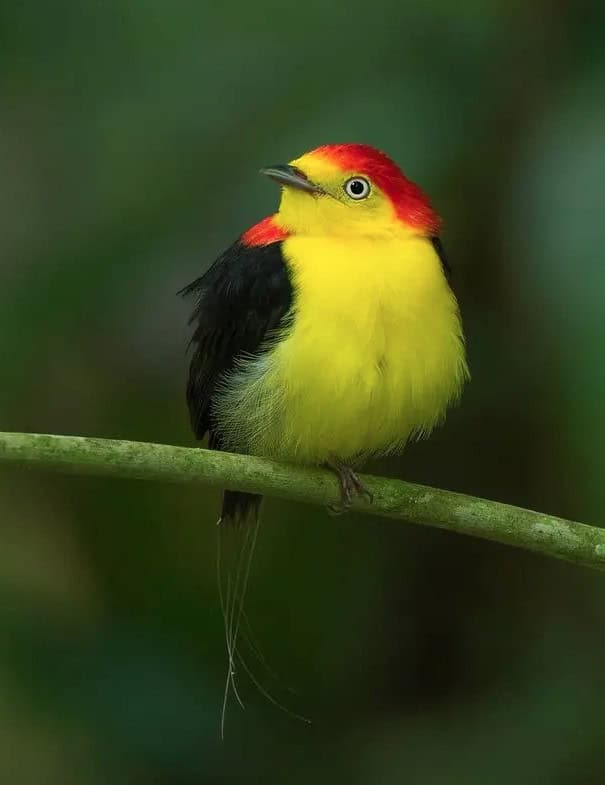
The Amazon Basin is home to various dazzling birds, and the wire-tailed manakin is among its most striking residents. This small bird is a visual standout with a vivid yellow face and belly complemented by an orange crown.
Known scientifically as Pipra filicauda, the wire-tailed manakin belongs to the Pipridae family. These birds reach about 11.5 centimeters in length, though the male’s distinctive tail filaments can add an extra 2.5 centimeters.

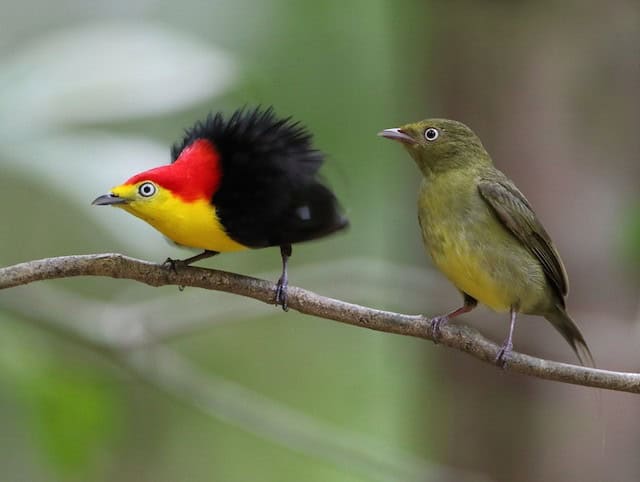
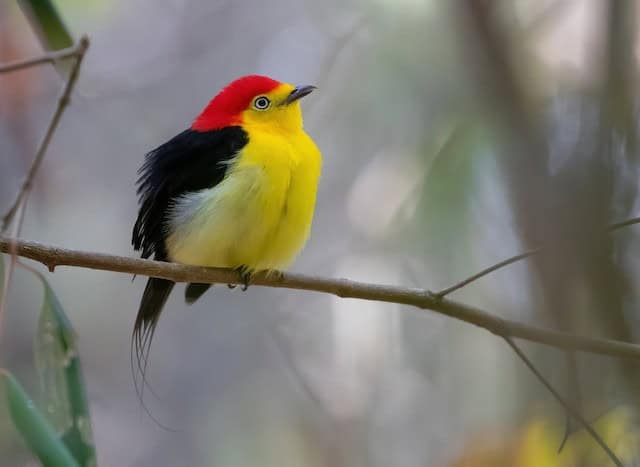
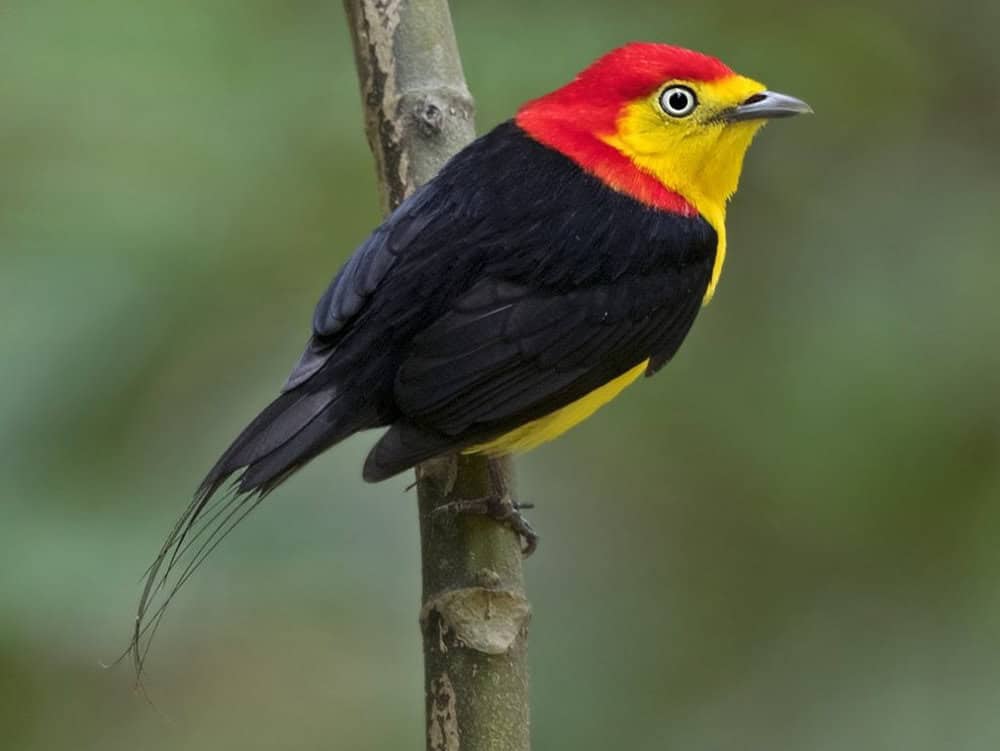
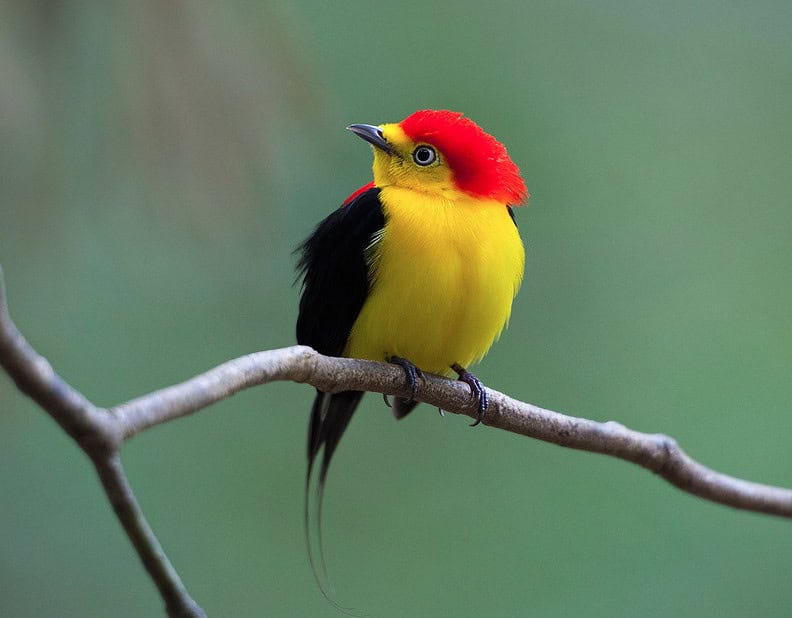
Male wire-tailed manakins boast a red crown and nape with a black back, and though seldom visible, they display white flight feathers during flight. One of the bird’s most unique features is the male’s tail, which has filaments that curve upward and inward.
The males also exhibit a bright yellow color across the forehead, face, and underparts. Females of this species display a more subdued palette, with olive-green upperparts and softer yellow underparts. Unlike the males, the females have shorter tails, and their yellow coloration is noticeably paler.

Wire-tailed manakins are typically found near river headwaters across the western Amazon Basin, including regions of Brazil, northern Peru, eastern Ecuador, Colombia, and parts of Venezuela.
They favor the humid edges of tropical forests and occasionally inhabit open areas near water, such as the borders of agricultural lands. Their diet mainly consists of fruits and berries, but they’re also skilled insect hunters, catching small insects mid-flight.
These birds exhibit a polygamous breeding system. Males establish small, dispersed display grounds, called leks, within the forest, usually between 1 to 8 meters above the ground. After mating, females depart to build nests independently.
Their nests, crafted from woven fibers and grasses, resemble hammocks in small trees, often situated over water. Females typically lay 1 to 2 eggs, incubating for 17 to 21 days. Once hatched, chicks are cared for by the mother and reach independence after about 13 to 15 days.
While the total population of wire-tailed manakins remains uncertain, they are generally considered common, though their distribution can be patchy. With no evidence of significant population decline, the wire-tailed manakin is not currently at risk of endangerment.
A captivating inhabitant of the Amazon, the wire-tailed manakin enchants nature enthusiasts with its vibrant colors and intriguing behaviors, adding a touch of brilliance to the tropical forest ecosystem.
Read More Birds