
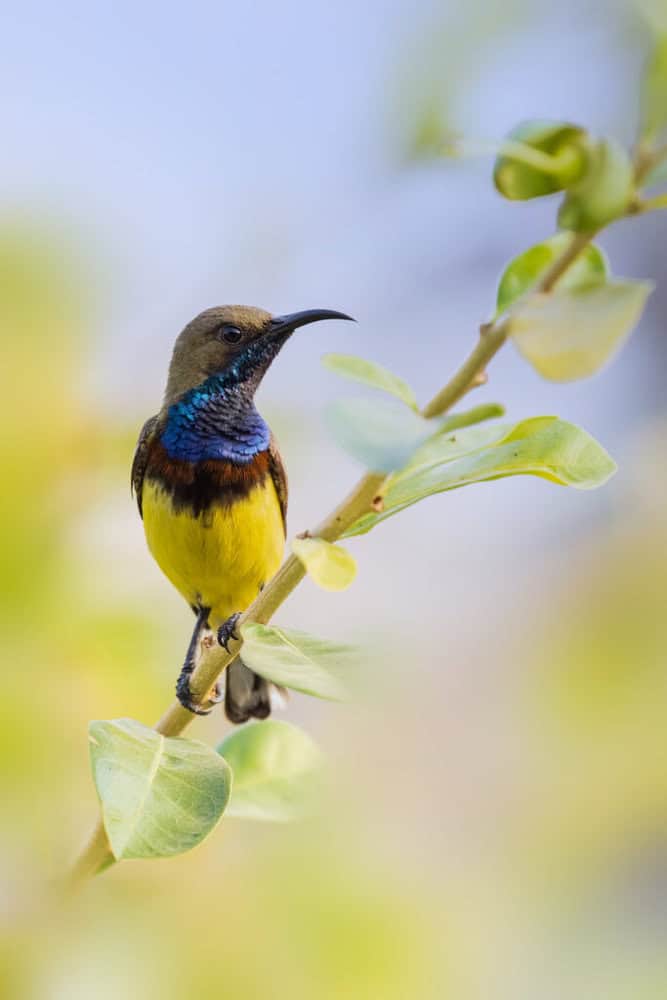
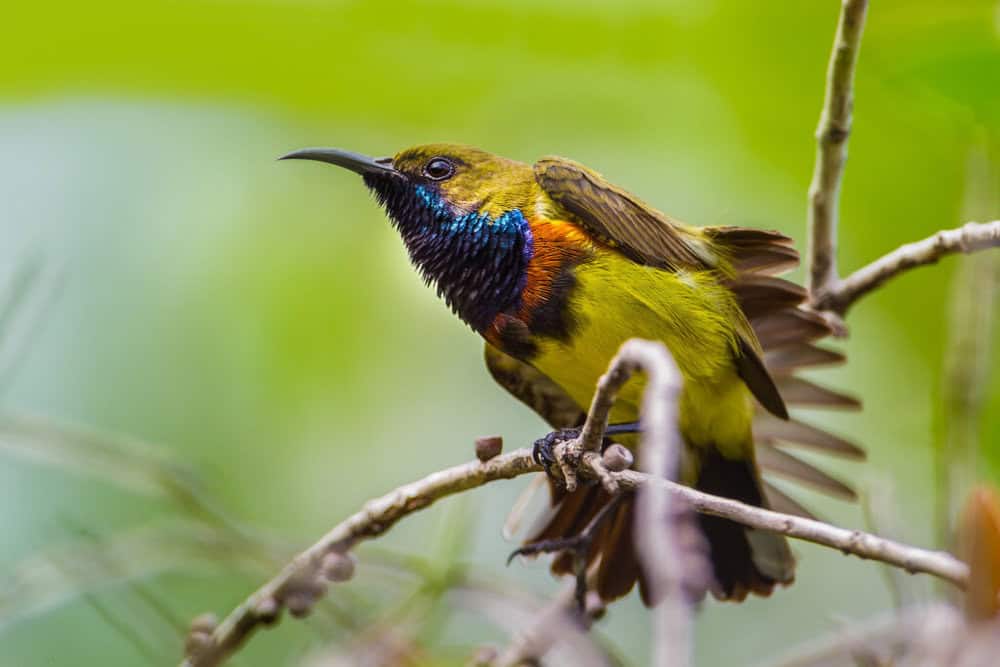
Among the vibrant birdlife of Southeast Asia and Australia, the Olive-Backed Sunbird (Cinnyris jugularis) is a true treasure. Known for its striking metallic blue and yellow plumage, this small bird holds an even more surprising feature — apricot-colored feathers tucked beneath its wings, visible during courtship displays.
This splash of color adds to the bird’s charm, captivating anyone lucky enough to witness it. With its metallic hues, the male Olive-Backed Sunbird stands out in the rich tapestry of bird species.

Measuring about 12 centimeters, it displays vibrant blue and yellow feathers, but the hidden apricot feathers under its wings truly set it apart, emerging when it’s trying to attract a mate.
Feeding on nectar from coconut and palm flowers, as well as hunting invertebrates like spiders and ants, the sunbird’s diet reflects its omnivorous nature. Its ability to hover and quickly flit through the air also makes it a master of feeding while on the move.
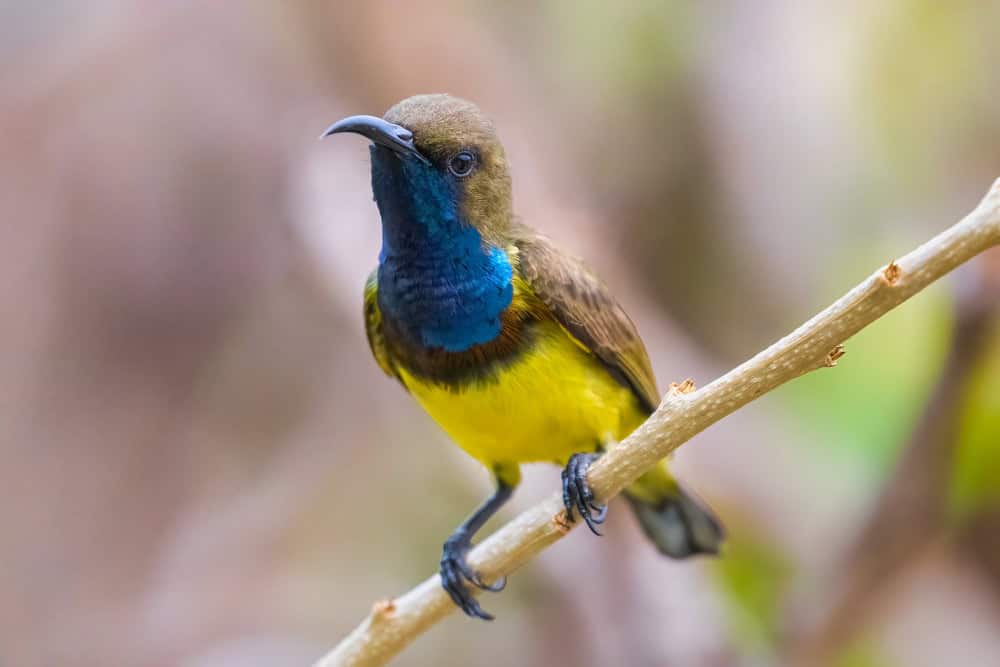
In contrast, the female’s appearance is more subdued, though no less graceful. During mating season, the male takes the spotlight, flaunting its vivid iridescent blue throat, chest feathers, olive-colored back, and wings.
Yet, the sudden reveal of the hidden apricot feathers beneath its wings is a stunning display, a secret trick designed to woo potential mates.
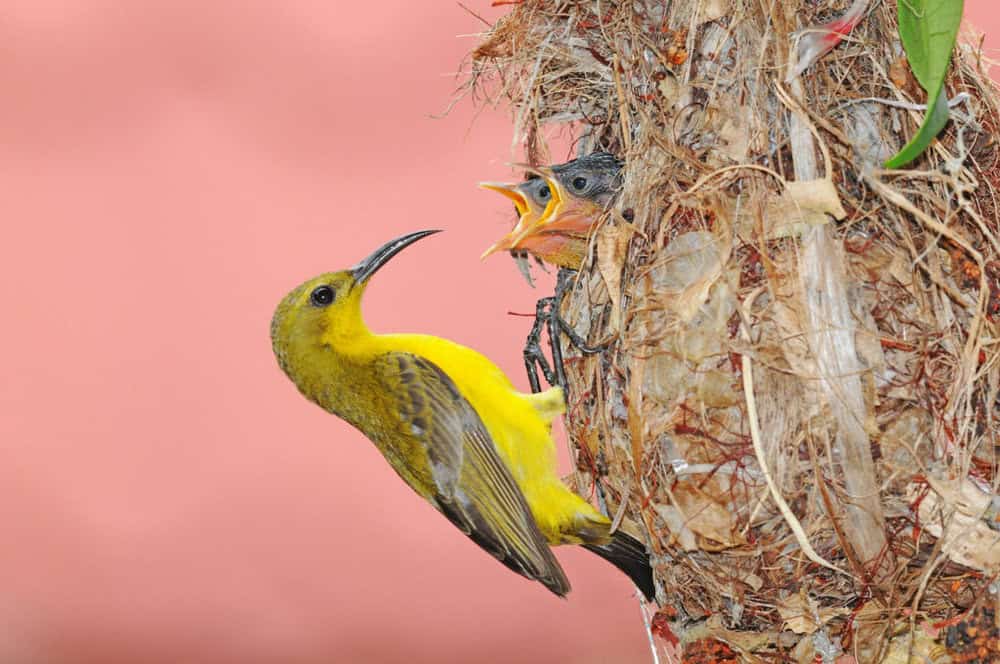
Olive-backed sunbirds typically breed from April to August in the Northern Hemisphere and from August to January in the Southern Hemisphere. During this time, the female constructs pear-shaped nests from grass and fibers, creating a small opening on the side.
She lays up to three pale green, speckled eggs, incubating them for around 11 days, demonstrating the species’ devotion to nurturing the next generation.
These sunbirds are found across a wide range, from southern China and the Philippines to Thailand and northeastern Australia. Initially linked to mangrove swamps, they’ve adapted to various environments, including woodlands, orchards, and coconut plantations near human settlements.
Despite threats from habitat loss and human activities, the Olive-Backed Sunbird’s population remains stable. With its captivating appearance and the hidden apricot feathers revealed during courtship, this bird continues to delight birdwatchers.
It’s a beautiful reminder of nature’s wonders and the need to protect the delicate balance of our ecosystems.
Read More Birds