
The Noisy Friarbird (Philemon corniculatus) stands out for its powerful calls and unmistakable appearance. Found across Australia and New Guinea’s forests and woodlands, this bird draws birdwatchers and nature enthusiasts alike.
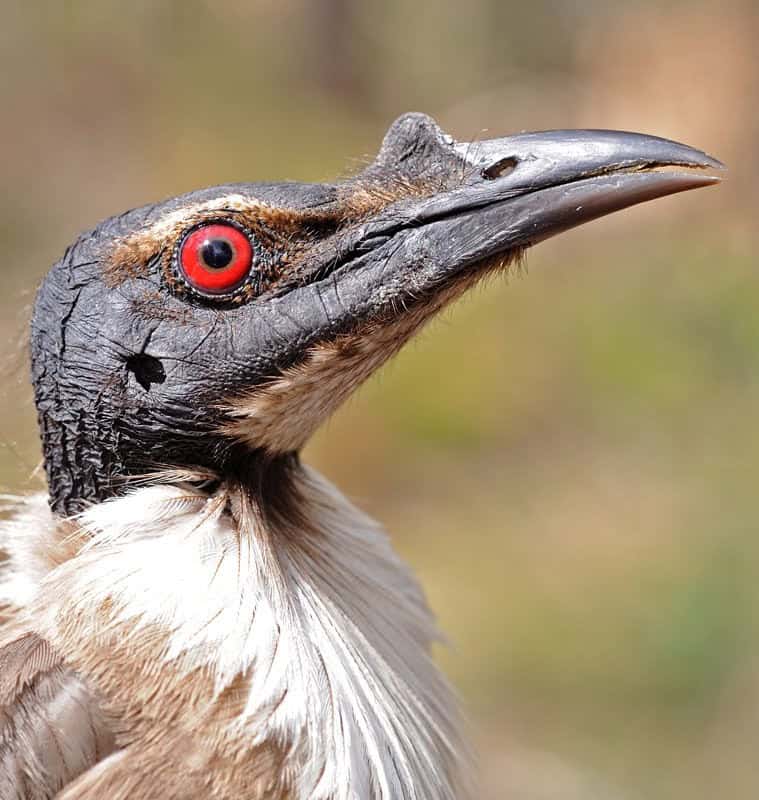
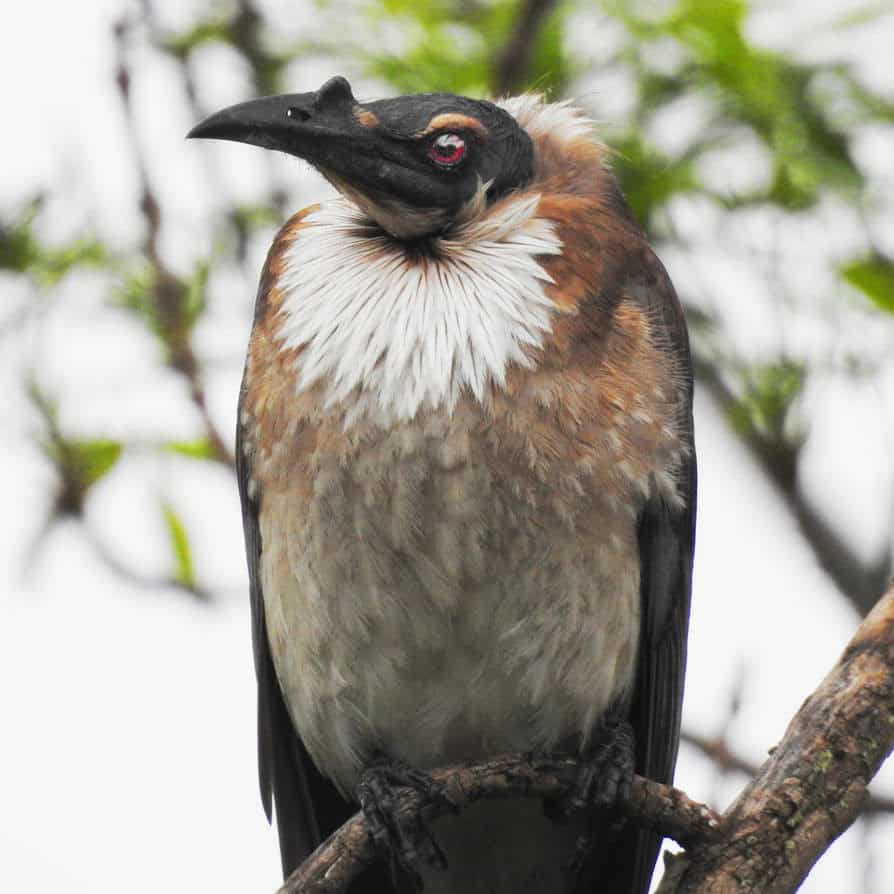
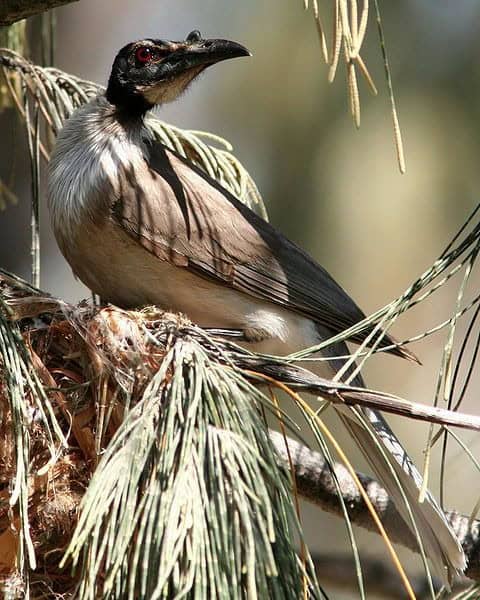
With a striking look, the Noisy Friarbird is robust, about 35 centimeters long. White patches on the chest and neck contrast its mostly black feathers. However, its defining feature is the featherless, wrinkled skin patch on its head, creating the illusion of a “friar’s hood” and lending the bird its unique name.
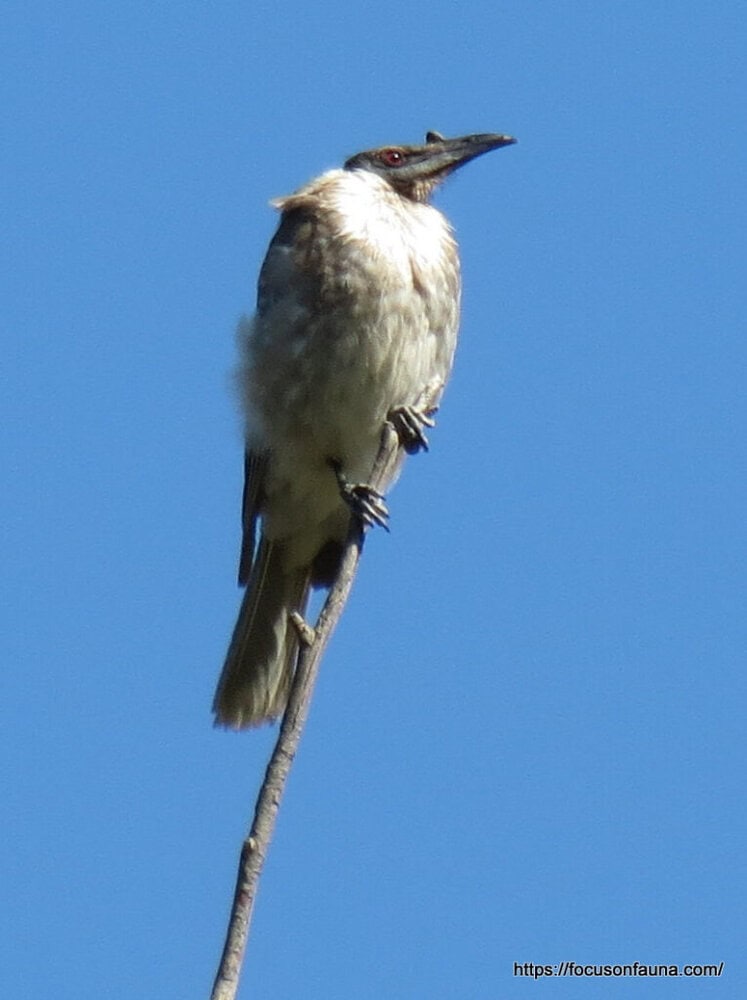
Beyond its appearance, the Noisy Friarbird is renowned for its vocal range. Its repertoire includes deep, resonant notes and sharp, high-pitched calls that echo through the forest. These vocalizations serve crucial purposes—marking territory, communicating with the flock, and performing courtship calls.
This highly social bird is often seen in flocks of varying sizes, where members stay connected through frequent vocalizations to coordinate movements and establish territory. They are protective of their feeding and breeding areas, using loud calls and, when needed, assertive behavior to ward off intruders.
Regarding diet, the Noisy Friarbird primarily feeds on nectar, using a brush-tipped tongue to extract it from flowers, aiding in pollination. It supplements its diet with fruits, insects, and occasionally small vertebrates, showcasing its adaptable feeding habits.
Conservation efforts aim to preserve the Noisy Friarbird’s natural habitat, as deforestation and habitat loss threaten its population. As pollinators and seed dispersers, these birds play an essential role in maintaining the health and biodiversity of their ecosystems.
For bird enthusiasts, spotting a Noisy Friarbird in the wild is unforgettable. With its distinctive appearance, lively flock interactions, and striking calls, this bird leaves a lasting impression, truly embodying the marvels of the avian world.
Read More Birds