
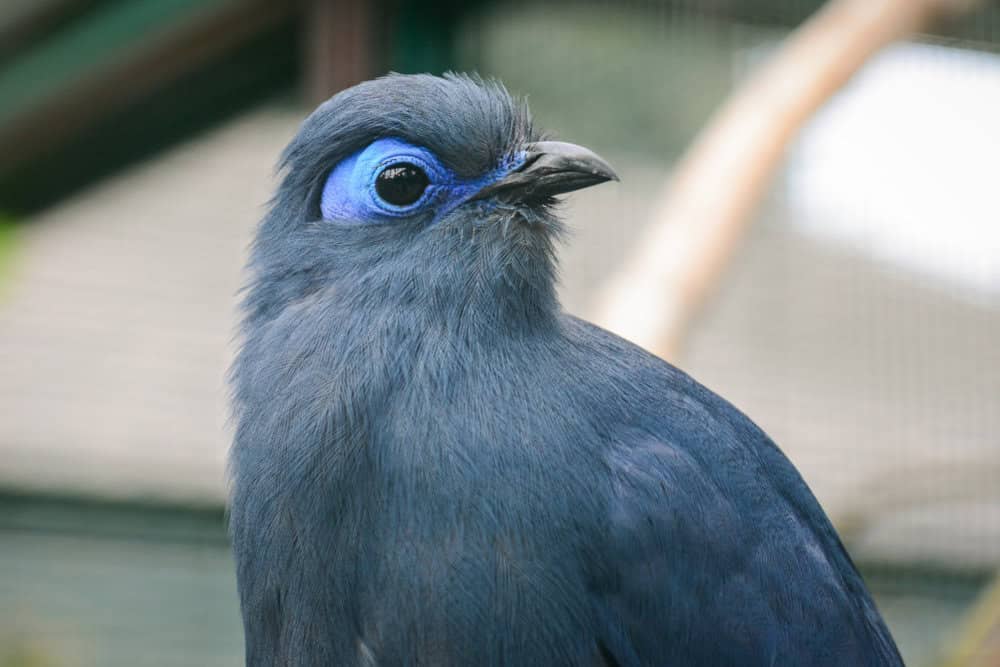
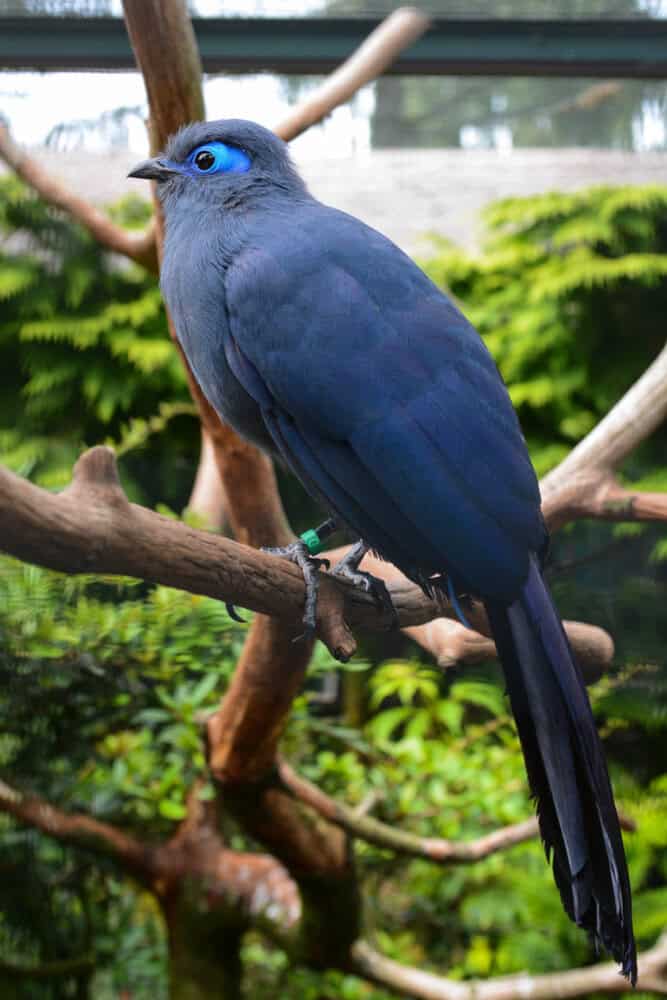
The Blue Coua is a stunning example of Madagascar’s rich biodiversity. Its vibrant blue feathers stand out against the lush green of the rainforest, while its wings and tail shimmer with a touch of violet, reflecting light in a striking display.
A small crest on its head adds to its distinctive appearance, and the skin around its eyes, which varies from cobalt blue to violet, gives it a mysterious look. Its black bill and expressive eyes make the Blue Coua a captivating sight wherever it goes.
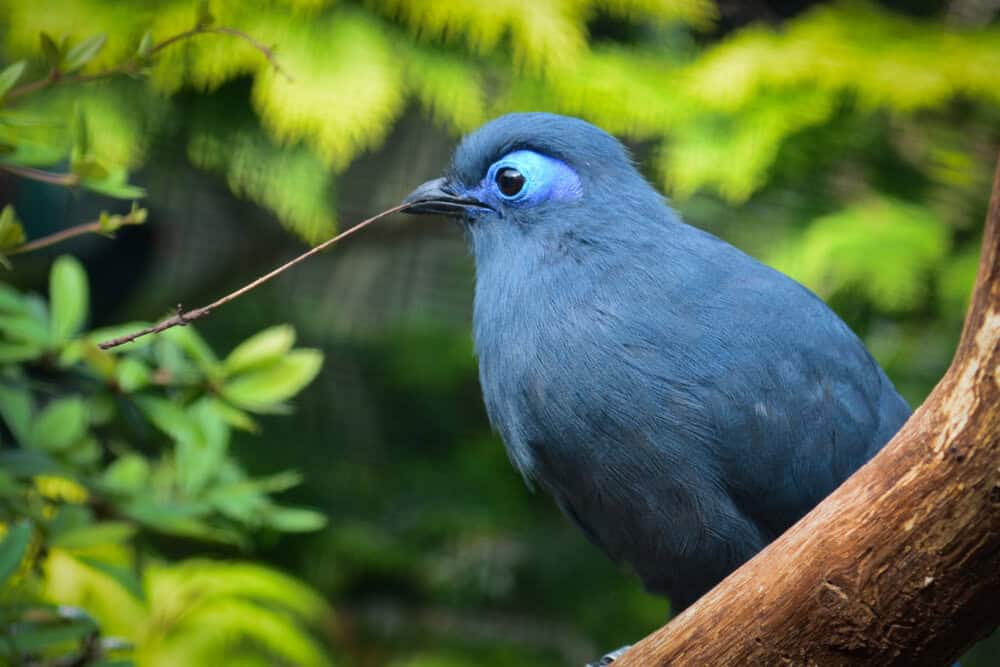
Even as a young bird, the Blue Coua has a unique presence. Unlike the vivid blue of adults, juveniles have sooty-black plumage on their backs, showing the transformation that occurs as they mature.
Their wings feature a more subdued blue, and the feathers around their eyes gradually give way to the colorful bare skin of adulthood.
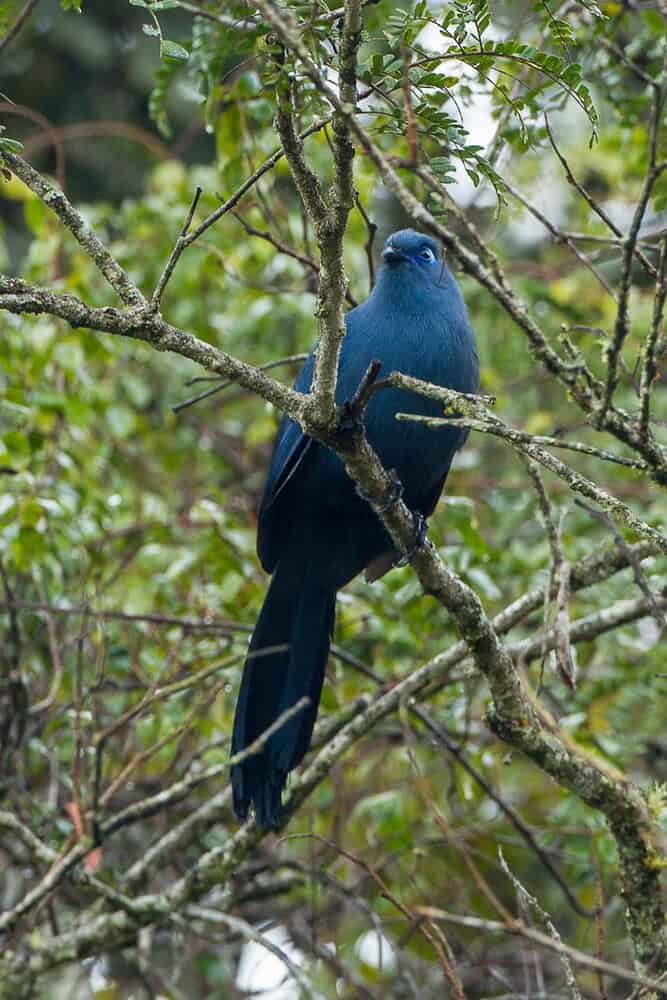
Native to Madagascar, the Blue Coua thrives in the eastern and northwestern parts of the island. It inhabits various environments, including primary rainforests, secondary growth, deciduous forests, and mangroves.
While it can be found in clove and cacao plantations, it avoids drier forest areas. The bird is usually found at elevations below 1,200 meters in the southeastern regions but can live as high as 1,800 meters above sea level.
The Blue Coua’s diet is as diverse as its habitat, feeding on insects, chameleons, crabs, frogs, fruits, and flowers. It moves skillfully through the trees, foraging from the canopy to the forest floor, often focusing on the mid-levels.
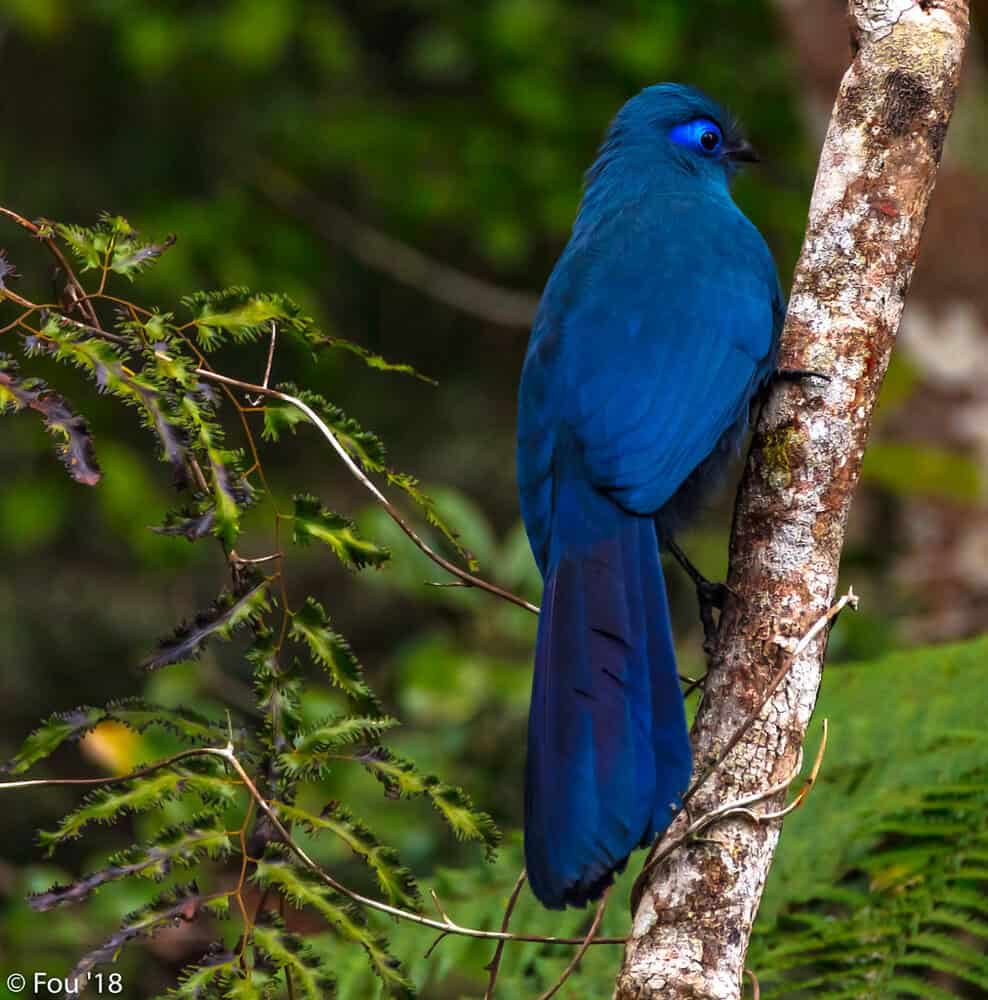
While usually seen alone or in pairs, it forms small family groups after the breeding season, during which males engage in courtship feeding.
The breeding season of the Blue Coua falls between July and December, coinciding with Madagascar’s rainy season. The bird carefully constructs a nest from sticks hidden in thick vegetation.
Only one white egg is laid, and both parents share the duties of incubating and feeding the chick. Though detailed information on their breeding cycle is limited, the dedication of these birds to their young highlights their nurturing nature.
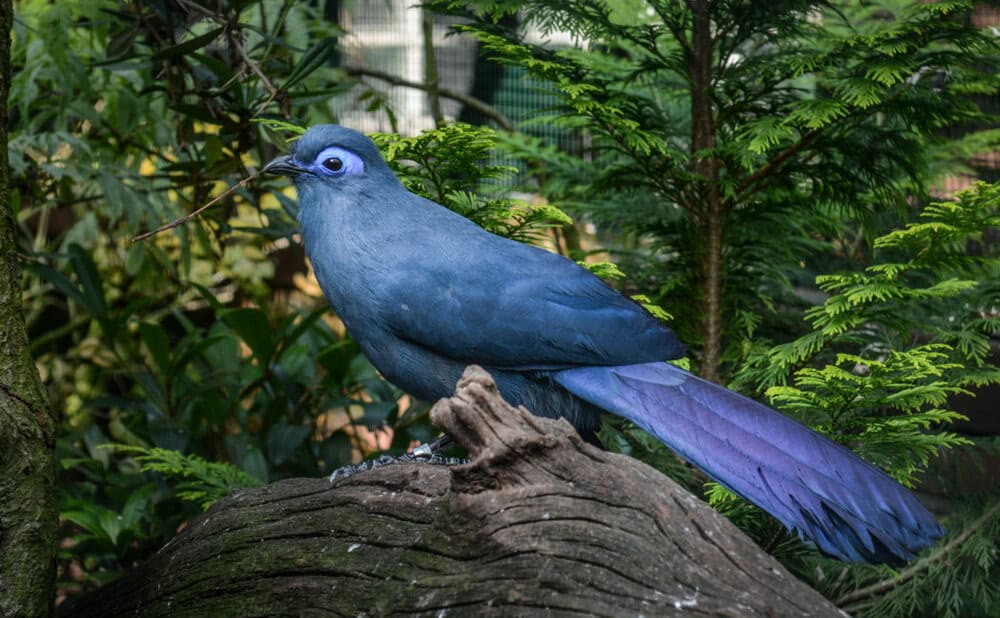
While the Blue Coua is not currently considered globally threatened, it still faces challenges due to hunting and habitat loss.
This beautiful bird serves as a reminder of the fragile ecosystems it inhabits and the importance of conservation efforts.
As we admire the Blue Coua in flight, it symbolizes the need to protect the natural wonders that still thrive on our planet.
Read More Birds