
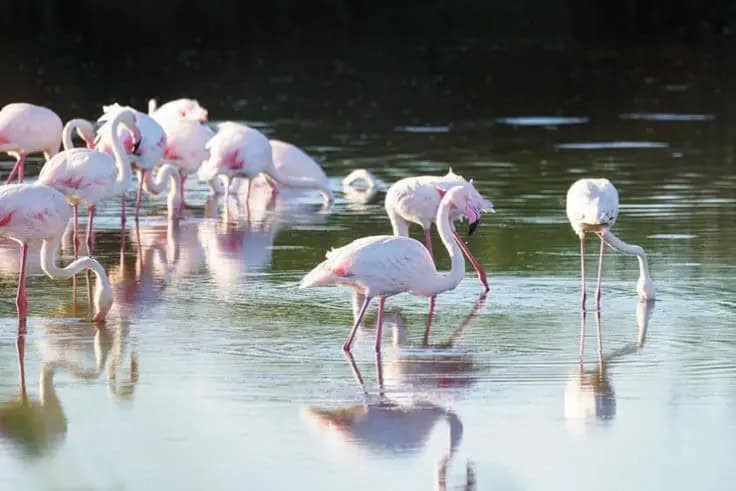
In the warm, humid plains of summer, vast wetlands transform as Greater Flamingos flocks gather in vibrant pink displays. These iconic birds are often seen foraging in the shallow waters of coastal marshes, searching for food and occasionally fresh water.
Seawater may infiltrate marshlands during droughts, impacting the flamingos’ feeding grounds. As the sun rises, hundreds of flamingos create a striking scene with their pink plumage blending into the dawn’s colors, although they often retreat as daytime heat and human crowds grow.
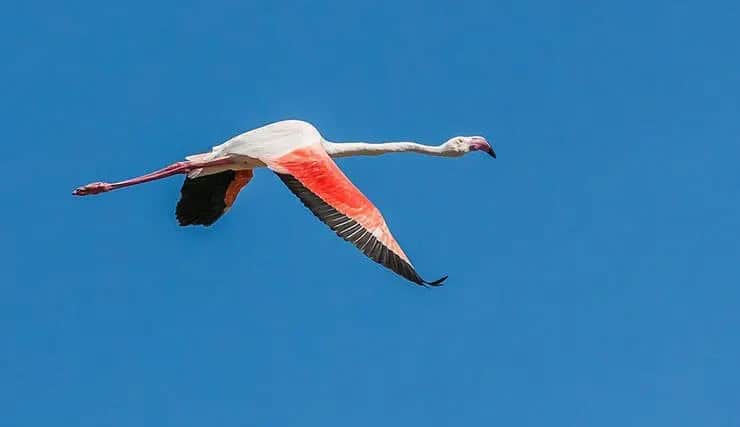
Greater Flamingos are notable for their size, reaching heights of up to 1.5 meters, and are widely distributed across continents, from the Mediterranean to parts of Africa and southwestern Asia.
Habitat and Diet
Greater Flamingos prefer wetlands, coastal lagoons, and marshes, where they can find the small crustaceans, algae, and mollusks that make up their diet. Their distinct downturned beak, equipped with lamellae, allows them to filter food directly from water.
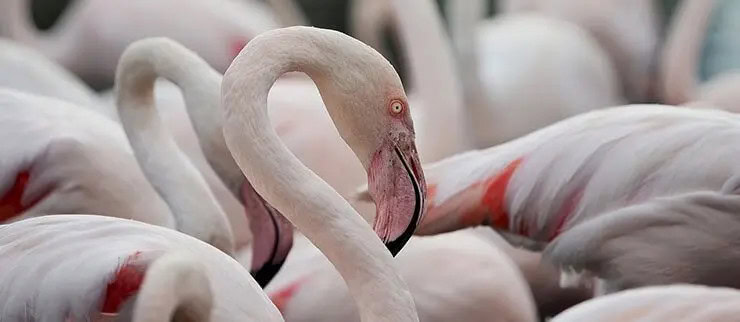
This feeding technique is enhanced by their long legs and neck, enabling them to wade into deeper waters. The vibrant pink hue of flamingo feathers is influenced by carotenoid pigments in their diet, with wild flamingos often showing richer coloration than those in captivity.
Nesting and Breeding
Greater Flamingos build nests in mounds, often using mud or debris to shape a small volcano-like structure, with a single egg laid on top.
After an incubation period of 27 to 31 days, the chick hatches and joins a “nursery” group with other young flamingos. Adult flamingos can recognize their own chick’s call within these large groups.
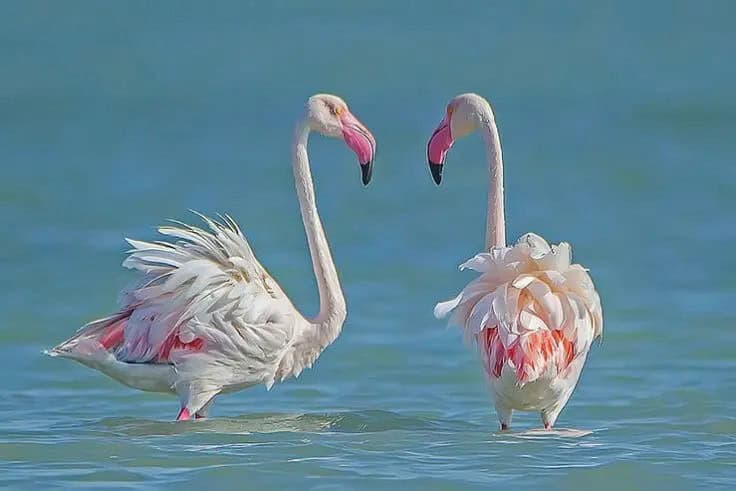
Flamingo chicks begin flying between 65 and 90 days after hatching, though they don’t reach sexual maturity until about three to five years. Courtship displays are a prominent aspect of flamingo behavior, involving synchronized head movements and vocalizations.
Distribution and Mobility
The Greater Flamingo is the only flamingo species in Europe, particularly in the Mediterranean regions of Spain, France, Italy, and Greece, extending to parts of Africa and Asia. They favor shallow lakes and swamps with low vegetation across salty, brackish, and mineral-rich freshwater habitats.
Conservation Challenges
While the Greater Flamingo is classified as “Least Concern” by the IUCN, its populations face several threats. Large colonies such as the Camargue in France and Fuente de Piedra in Spain experience challenges like predator pressures and human disturbances.
Climate conditions, particularly water levels, are crucial for successful reproduction, with flamingos often refraining from nesting in unfavorable years.
Continued conservation efforts focus on protecting essential habitats from human encroachment and managing water levels to support reproductive success, contributing to the long-term stability of Greater Flamingo populations
Read More Birds