
The Atlantic puffin, scientifically known as Fratercula arctica, is a beloved seabird recognized for its unique appearance and endearing behavior. Often spotted along the northern Atlantic coastlines, these charming birds are a favorite among birdwatchers and nature enthusiasts.
Atlantic puffins primarily inhabit coastal cliffs and islands across the North Atlantic, with significant populations in northern Europe, Iceland, and North America. Their distinctive appearance, featuring a vibrant beak, striking plumage, and a waddle-like walk, makes them easy to identify.
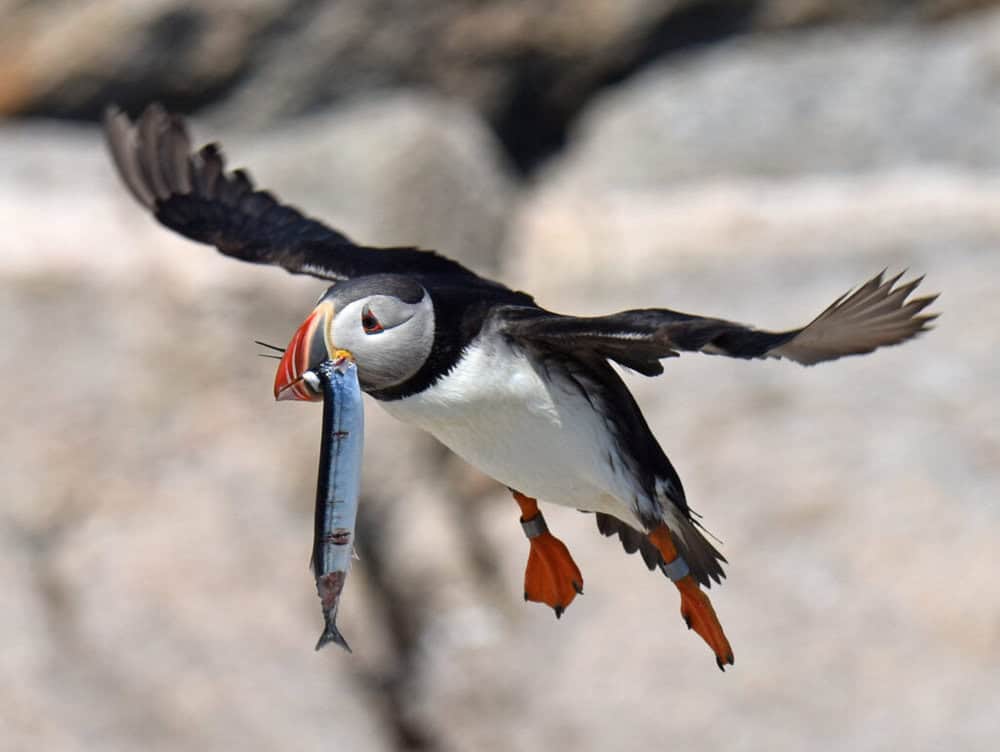
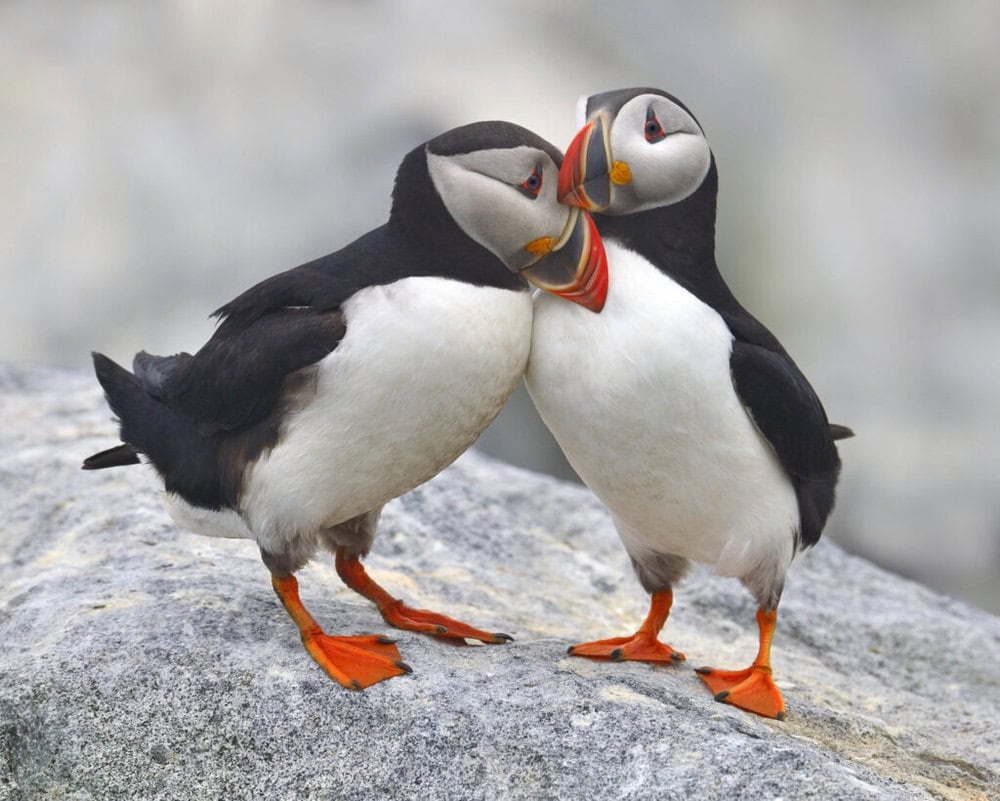
One of the puffin’s most notable characteristics is its brightly colored beak, which displays vivid shades of orange, yellow, and blue during the breeding season. This colorful beak helps in courting and also aids in gathering fish for their young.
Interestingly, puffins shed their beaks’ bright outer layer during the winter, replacing it with a subtler version, and then regain their vibrant colors as the next breeding season approaches.
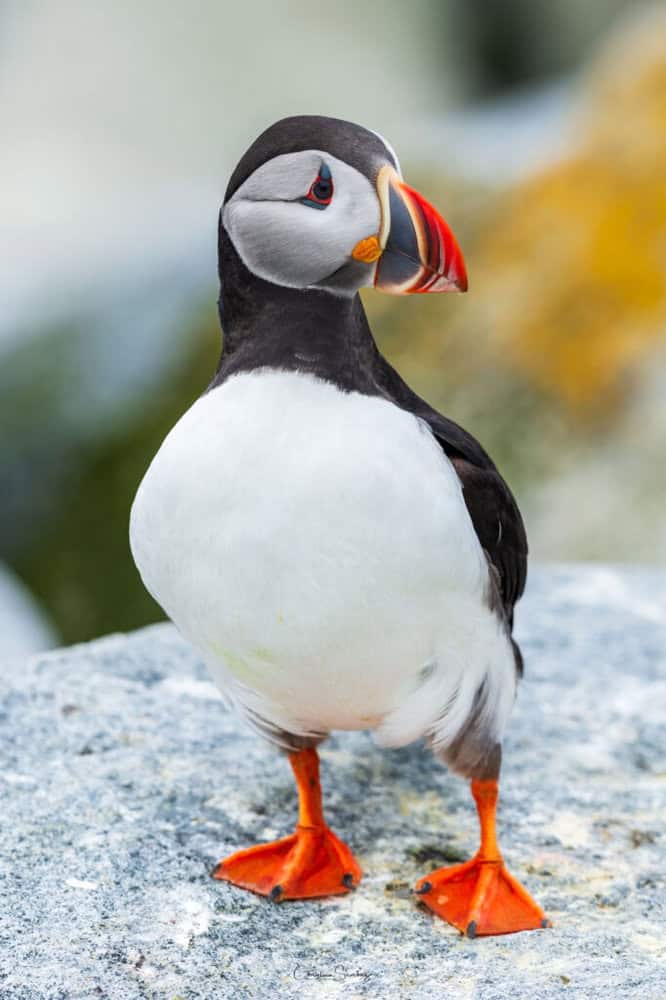
The puffin’s plumage adds to its visual appeal. Their contrasting black upper body, white underparts, and unique facial markings create a sharp and memorable look. During the breeding season, they also develop delicate, colorful feathers around their eyes, enhancing their already enchanting appearance.
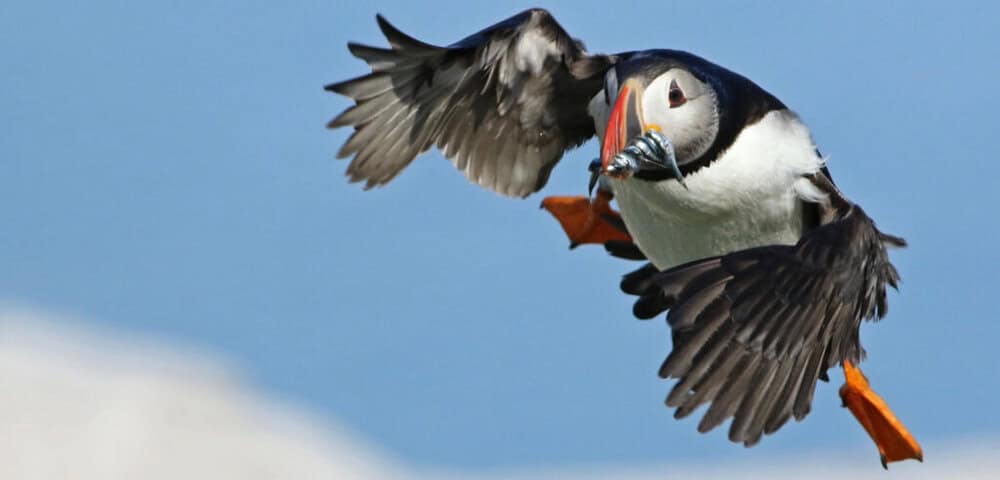
Adapted to a life at sea, Atlantic puffins are skilled divers and swimmers, using their wings to move underwater as they hunt for small fish like sand eels and herring, which comprise the bulk of their diet.
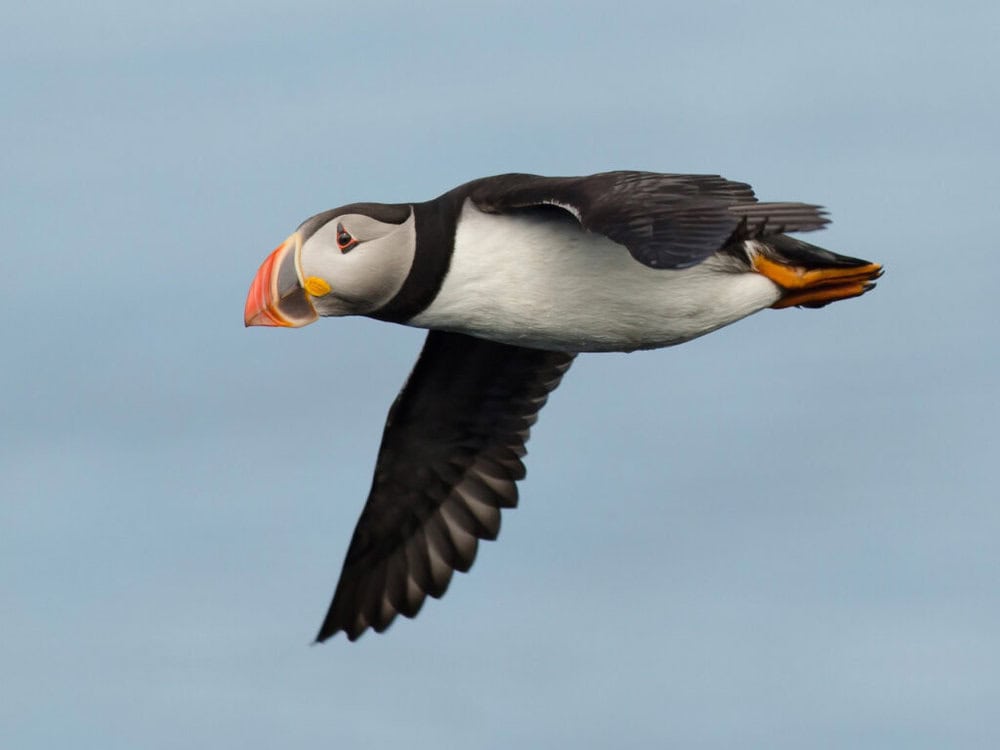
With short wings and streamlined bodies, puffins are agile hunters in the water. They’re also competent fliers with rapid wing beats, which allow them to travel efficiently between their nesting sites and oceanic feeding areas.
During the breeding season, puffins gather in large colonies on coastal cliffs and islands, digging burrows in soft soil or utilizing natural crevices for nesting. These birds are monogamous, with pairs often returning to the same nesting site year after year.
Both parents are involved in incubating the egg and caring for the chick, reflecting their strong bond and commitment to family.
The Atlantic puffin population faces several challenges, such as climate change, overfishing, habitat degradation, pollution, and entanglement in fishing gear.
Conservation efforts focus on safeguarding their breeding colonies, minimizing human interference, and promoting sustainable fishing practices to ensure survival.
The Atlantic puffin’s captivating presence draws visitors who come to observe their nesting habits and amusing antics. Their lively presence adds an element of charm to the northern coastal landscapes, bringing joy to those who witness these colorful seabirds.
The Atlantic puffin is more than just a delightful seabird; it plays a vital role in the North Atlantic ecosystem. By appreciating and protecting these remarkable birds, we can help ensure they continue to enchant coastal regions and inspire future generations.
Read More Birds