
A wildlife rescue team in Zimbabwe saved the life of an elephant named Martha after she was found limping with a poacher’s snare tightly wrapped around her leg.
The wire, which had cut deeply into her flesh, left her in severe pain and unable to walk properly.

Martha was spotted by the Musango Island Safari Camp owner, who immediately alerted local conservationist Catherine Norton.
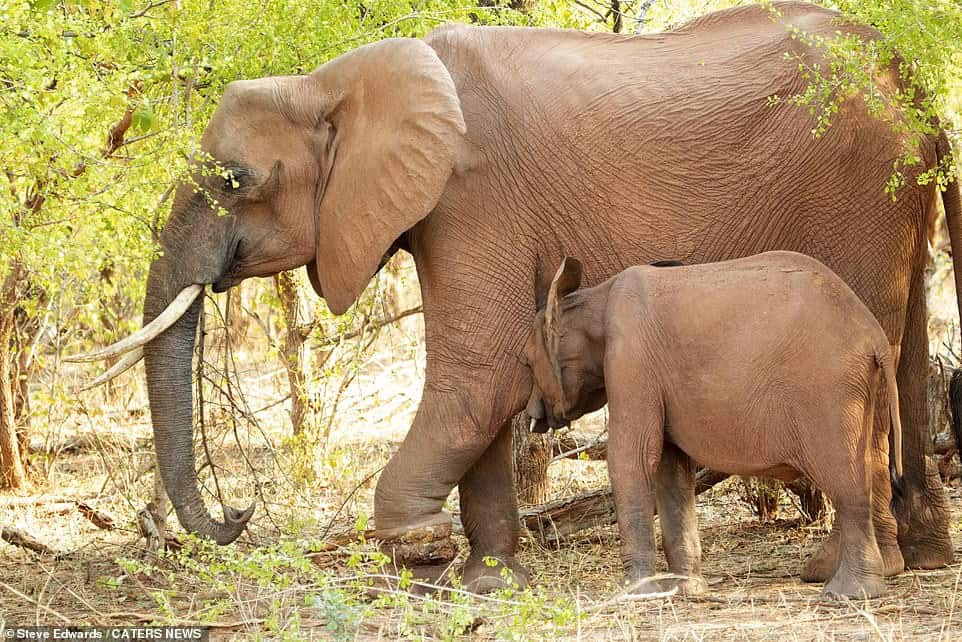
Norton, 58, quickly mobilized her team to help Martha, who was accompanied by her young calf.
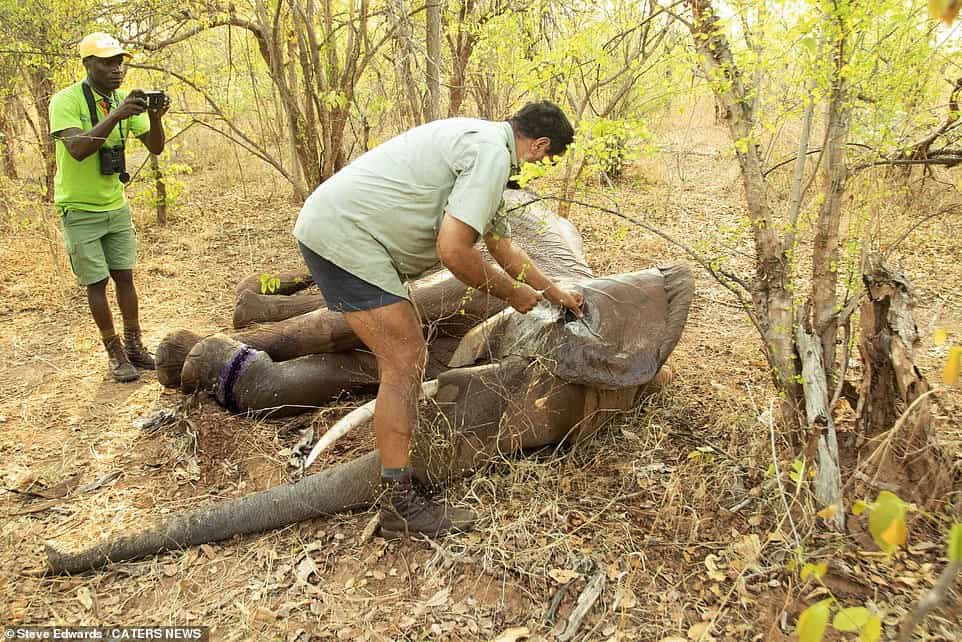
“We had to act fast. Without intervention, she would have died,” Norton explained. The team sedated the elephant, cleaned the infected wound, administered antibiotics, and carefully removed the wire with cutters. Norton added, “It only took her a few minutes to recover, but things could have turned out much worse.”
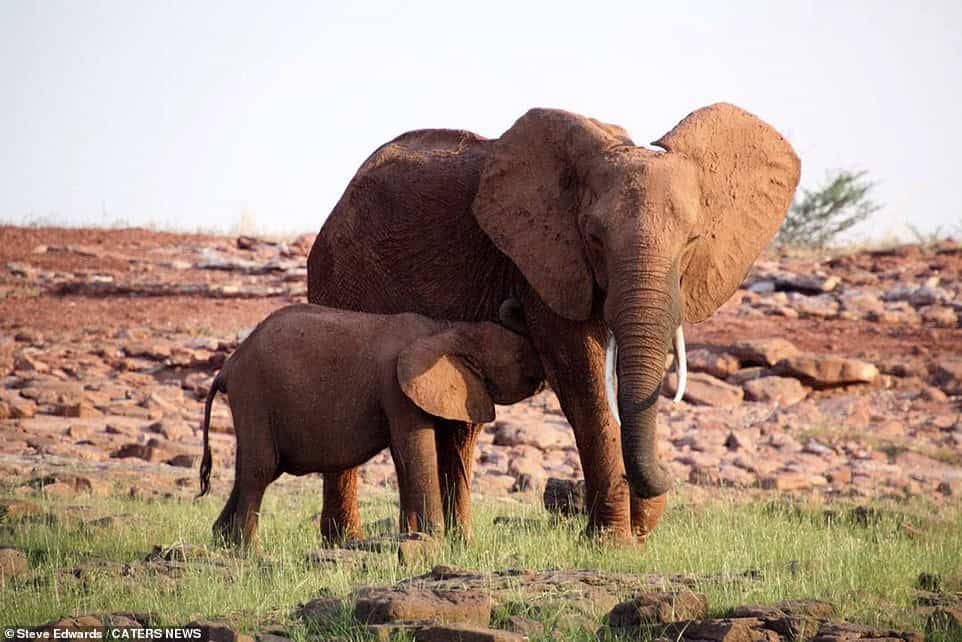
Martha’s calf, still dependent on its mother, would have likely died as well if Martha hadn’t survived. Norton emphasized the devastating impact of poaching, saying, “This shows how much damage one wire can do to an innocent animal. A single poacher can set up to twenty snares in a day.”
Unlike traditional hunting with firearms, wire snares are designed to capture animals indiscriminately.

Though typically intended for smaller animals, these traps often catch larger species like elephants and rhinos.
Snares are usually suspended from trees to catch animals by the neck, causing them to panic and tighten the wire as they struggle, eventually leading to suffocation.
While larger animals like elephants are strong enough to dislodge the snare, the wire often cuts deeper into their limbs, causing swelling, infection, and sometimes death from starvation or sepsis. In 2017, a lion in Zimbabwe tragically died when a snare tore into its stomach and neck.
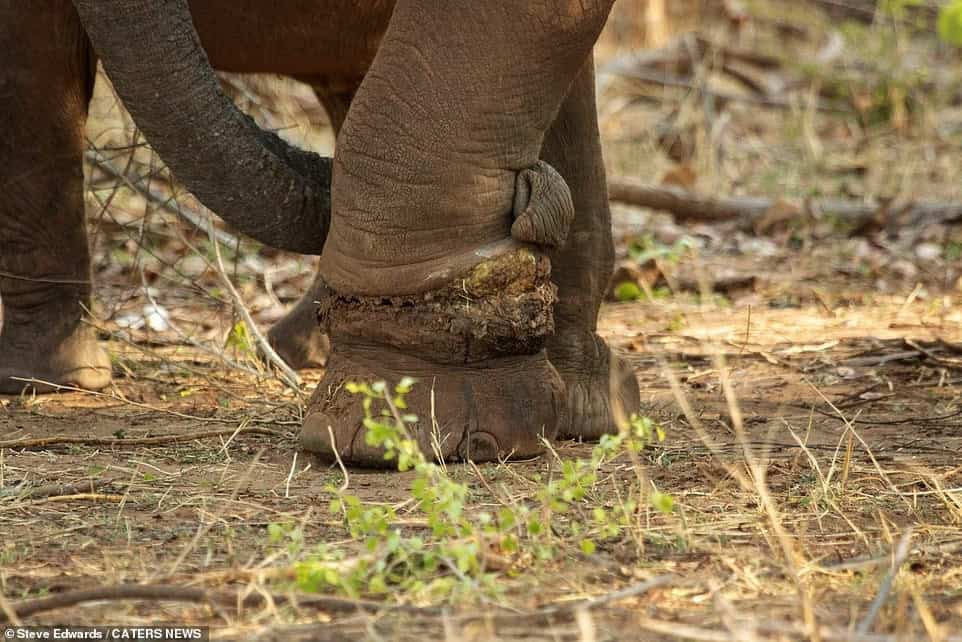
These hidden snares, often found near game trails and water sources, threaten wildlife significantly.
Norton’s swift actions in Martha’s case helped avert another tragedy, but the threat posed by such poaching methods persists.

Read more Elephant News.


