
In the dense forests of southeastern Brazil, a rare and critically endangered bird is captivating the attention of conservationists and birdwatchers alike. Known as the cherry-throated tanager, this species faces the risk of extinction but also offers a glimmer of hope for its survival.
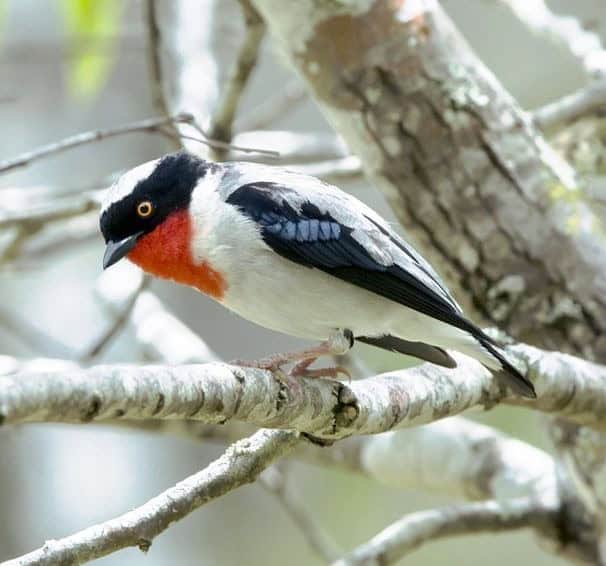
This tanager is easily recognized by the vivid cherry-red patch on its throat, which varies in size between individuals. Its striking appearance is further highlighted by a wide black mask that stretches across the eyes, meeting at the nape.
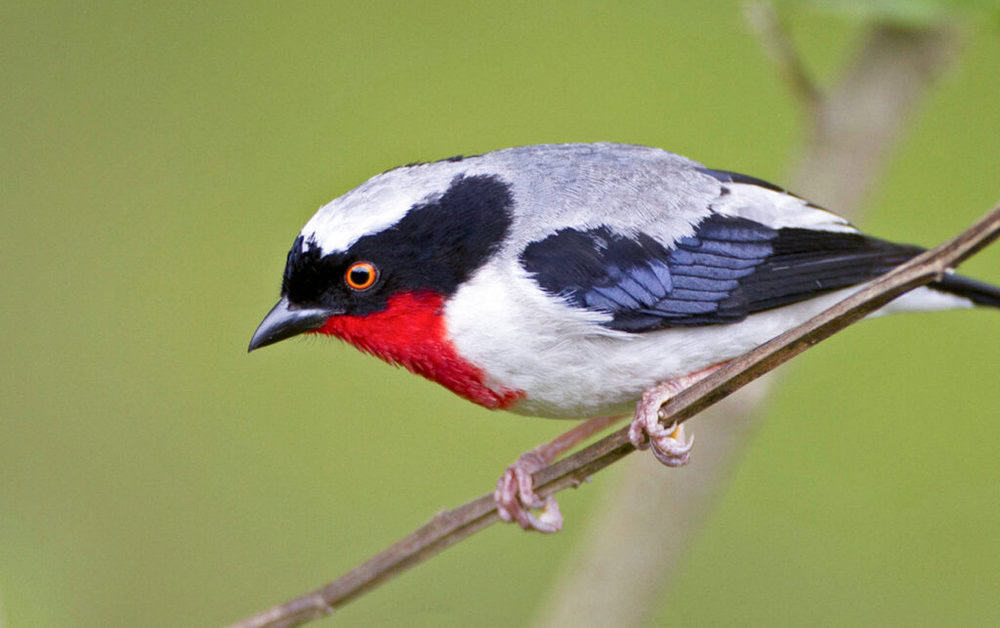
When viewed head-on, a thin white line above the black mask gives the bird the illusion of a white forehead. Its upper body is ash grey, while the back is darker, providing a striking contrast. Its wings and square-tipped tail are jet black, with a hint of blue iridescence on the feathers.
The uppertail coverts are also black, tipped in white. With a white belly, pink feet, and yellow eyes, this bird presents a truly unique and beautiful sight.
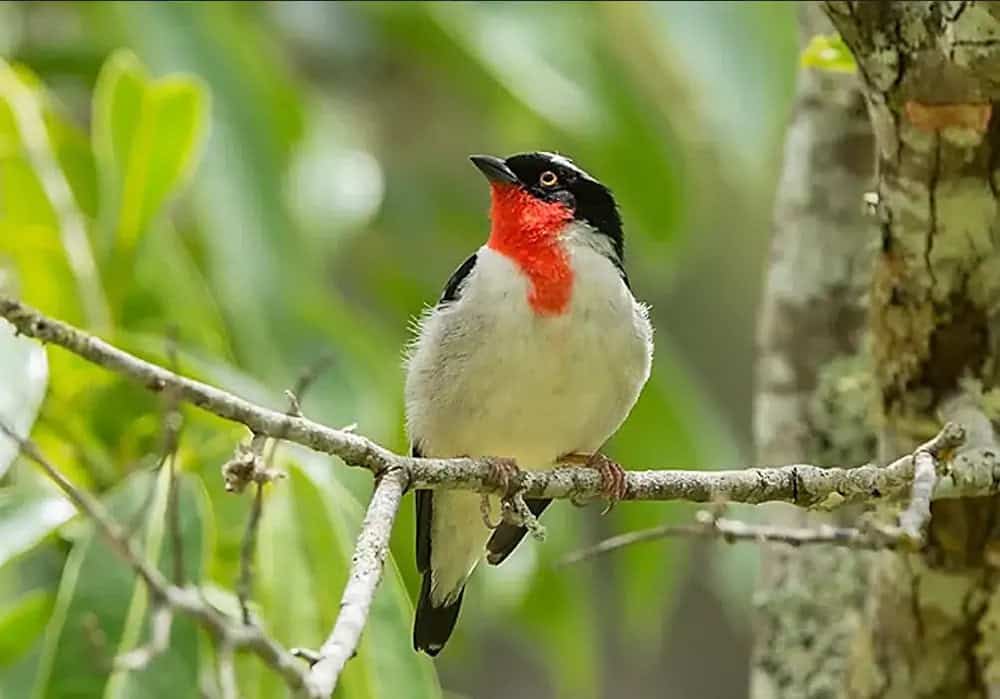
Native to Brazil, the cherry-throated tanager inhabits the forests of Espírito Santo, particularly in regions like Fazenda Pindobas and Mata do Caetés. These birds prefer the humid canopies of forested areas between 850 and 1,250 meters.
The tanager primarily feeds on small invertebrates such as caterpillars, ants, and butterflies. While its feeding habits are known, its breeding behaviors remain largely mysterious. It’s believed that the species breeds between October and January, with the female laying three to five eggs.
Incubation is thought to last 10 to 13 days, and chicks fledge around 8 to 11 days after hatching, based on observations of similar species.
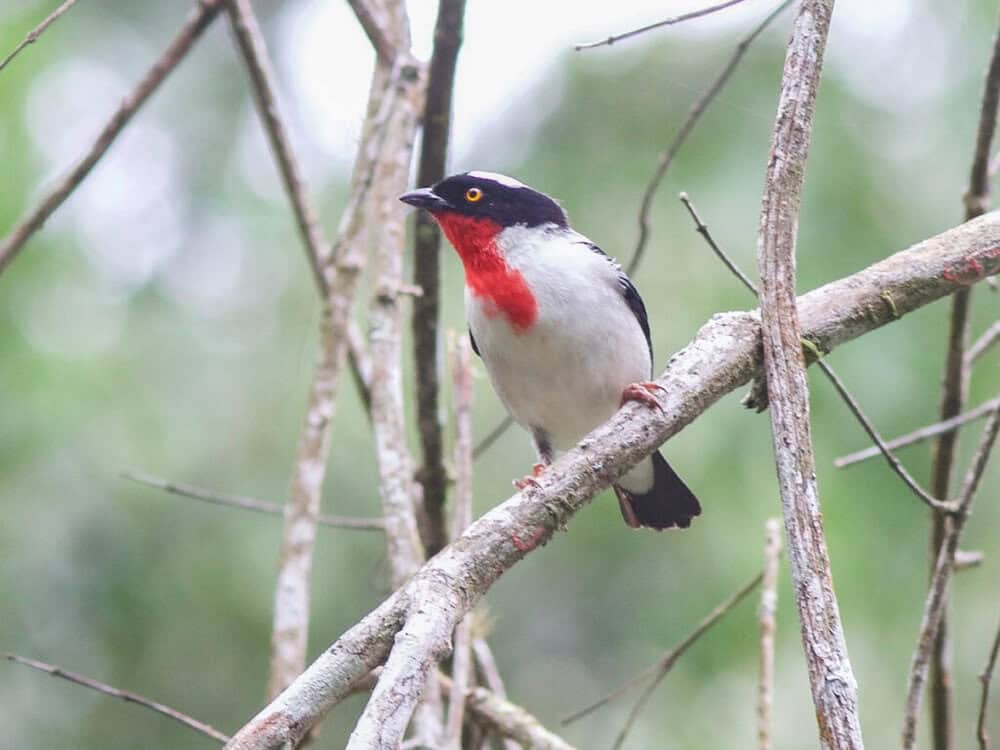
Despite its beauty, the cherry-throated tanager is critically endangered, according to BirdLife International. Estimates suggest that only 30 to 200 adult birds remain, with an extremely limited range of just 31 square kilometers (12 square miles).
Currently, only 14 to 20 individuals have been documented, some juveniles. The fact that this species has persisted for over a century hints that there could be undiscovered populations.
However, the main threat to their survival is habitat loss due to deforestation, which fragments the forests they rely on. Although the bird was already rare before significant habitat destruction, the exact reasons behind its scarcity remain unclear.
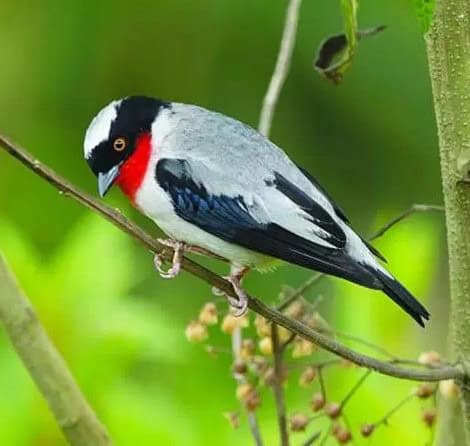
To help protect the cherry-throated tanager, raising awareness about its endangered status is essential. Conservation efforts should focus on studying the species and its environment more closely to develop strategies to protect this bird and its habitat.
With dedicated efforts and continued conservation work, there is hope that the cherry-throated tanager will continue to survive and flourish in the wild.
Read More Birds