
Happy, a 49-year-old elephant at the Bronx Zoo, might soon become a key figure in a legal battle that could reshape how animals are viewed under the law.
As she wanders her small enclosure, zoo visitors catch brief glimpses of her from the “Wild Asia Monorail.”
The focus of a legal case brought by the Nonhuman Rights Project (NhRP), Happy’s future, and the rights of other animals hang in the balance.
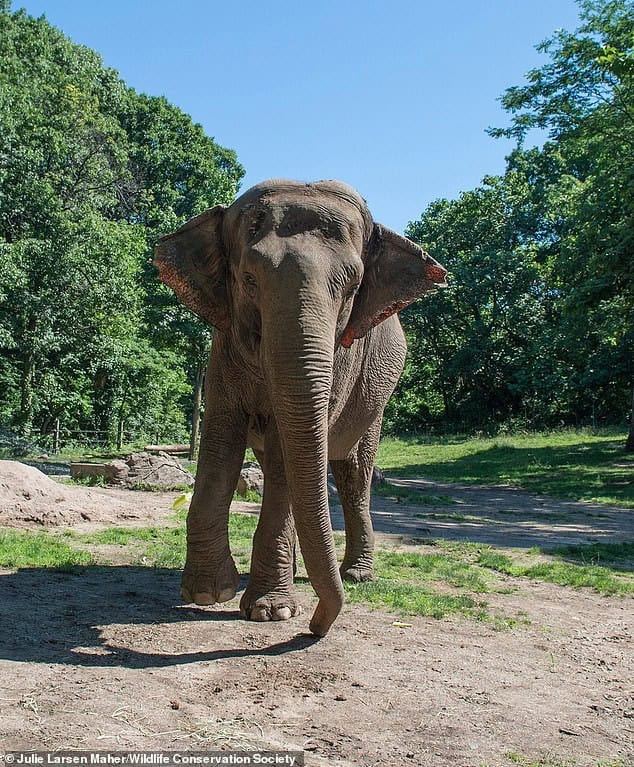
At the heart of the case is the question: is Happy simply an animal, or does she have the same legal rights as a person? Animal rights activists argue that her cognitive abilities make her deserving of legal personhood.
If successful, this case could lead to a rethinking of how society treats animals, including potentially farm animals and pets.
Steven Wise, the lawyer leading the charge for the NhRP, has filed a writ of habeas corpus—a legal tool traditionally used to argue that a person is unlawfully imprisoned—on Happy’s behalf.
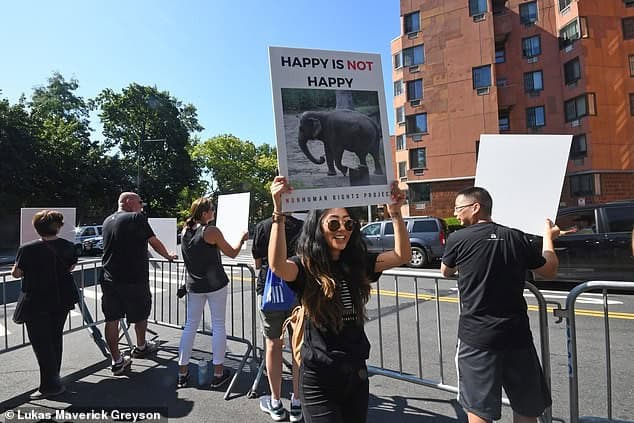
The goal is to transfer her to a sanctuary where she can live freely with other elephants. Wise and his team assert that Happy’s intelligence, empathy, and self-awareness set her apart from most animals.
For example, she was the first elephant to pass a mirror self-recognition test, which had previously only been achieved by humans, apes, dolphins, and killer whales.
The Bronx Zoo, however, defends its treatment of Happy, stating that she is well-cared for and would face dangers from other elephants if moved.
They argue that Happy, like other animals, is considered property under centuries of legal precedent and thus does not have her rights.
The zoo also accuses Wise and his organization of using Happy’s case to advance a broader, more radical animal rights agenda that could have far-reaching consequences.
Critics, including farmers and ranchers, fear that a ruling in Happy’s favor could pave the way for activists to demand the release of other animals, potentially including farm animals and household pets.
They argue that while the NhRP currently focuses on elephants, great apes, dolphins, and whales, this could expand to dogs and other animals as science reveals more about animal intelligence.
Elephants are known to be especially social and intelligent, often forming complex relationships and exhibiting behaviors that suggest deep emotional bonds.
In the wild, they travel over vast distances and live in close-knit, multi-generational family groups. Wildlife experts argue that elephants like Happy, are not suited for captivity due to their complex social needs and intelligence.
Zoo insiders have reported that elephants in captivity sometimes exhibit neurotic behaviors, such as repetitive swaying and head-bobbing, which may be signs of boredom and frustration.
Happy’s life story has been marked by loss and isolation. Captured as a baby in Thailand, she was brought to the U.S. along with six other calves. Later, she arrived at the Bronx Zoo in 1977 with another elephant named Grumpy.
Over the years, Happy formed bonds with other elephants, but these relationships ended in tragedy.
Other elephants fatally injured Grumpy, and later, another companion, Sammy, was euthanized after developing a liver disease. Happy has since lived largely alone, separated by a fence from another remaining elephant, Patty.
Animal welfare advocates have long called for Happy’s relocation to a sanctuary, and over a million people have signed a petition supporting her release.
Wise’s case draws comparisons to James Stewart, a slave who gained his freedom through habeas corpus in England.
Though a previous court ruling acknowledged Happy’s extraordinary intelligence, the judge ultimately cited legal precedent in denying her release.
Now, Wise is appealing that decision, hoping to secure Happy’s freedom. If successful, Happy would be the first animal in U.S. history to be granted rights under habeas corpus, potentially opening the door for similar cases and sparking significant changes in animal rights law.
Read more Elephant News.


