
Researchers from Colorado State University (CSU) have uncovered another human-like behavior in elephants – they use names to identify and communicate with each other.
During a study in Kenya, scientists recorded 470 distinct vocalizations from elephants, revealing unique calls tailored to specific individuals within the herd.
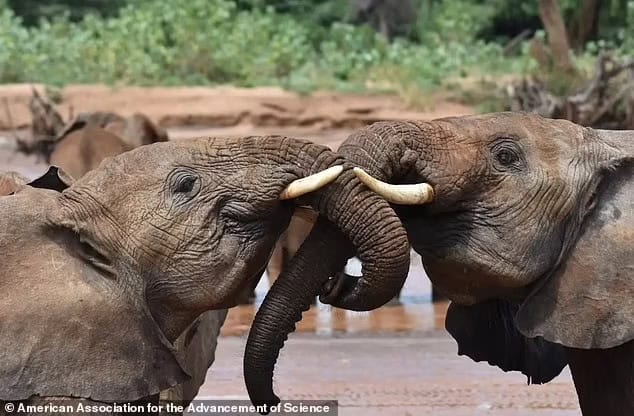
Utilizing machine learning, the team discovered that each call had a distinct “tune,” varying in tone and pitch, depending on which elephant was being addressed. The researchers played these calls back to the elephants to test the theory.
Remarkably, the elephant being “named” responded by making a noise in return or moving toward the sound source, indicating that the communication was directed specifically at them.
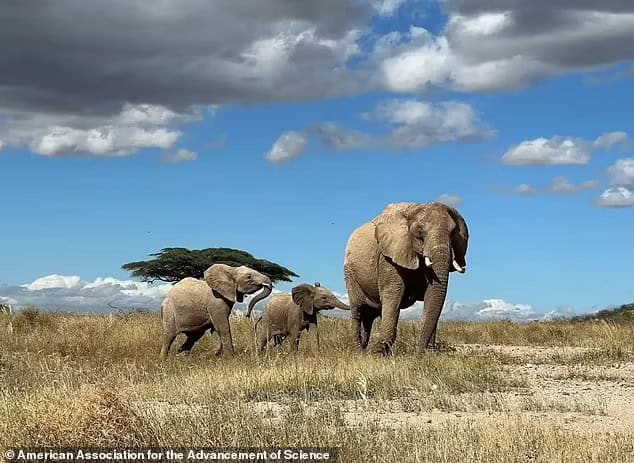
This groundbreaking discovery highlights elephants’ capacity for abstract thinking, suggesting they may be more socially complex than previously understood.
Dr. Michael Pardo, the study’s lead author, explained, “Unlike dolphins and parrots, which mimic the calls of others to communicate, elephants do not imitate each other’s calls. Instead, their vocalizations function more like human names, serving as unique identifiers for each individual.”
Elephants are now the third known species to use names to communicate, alongside dolphins and parrots.

This research builds on previous studies that have found similarities between elephants and humans, such as their ability to express compassion, mourn, use tools, and care for their young over long periods.
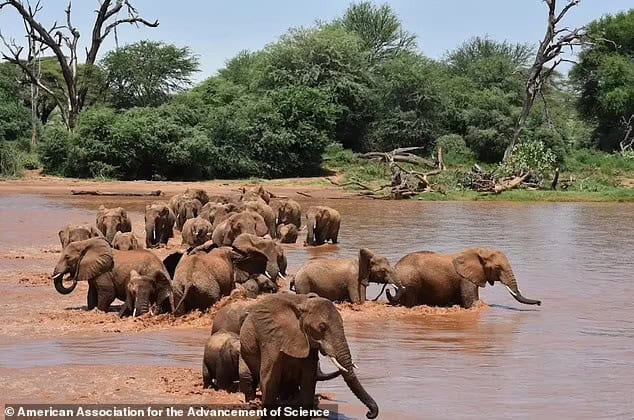
The study involved observing 101 elephants over 14 months in Kenya’s Samburu National Reserve and Amboseli National Park.
The researchers employed machine learning to analyze the calls’ acoustic structure, confirming that these vocalizations were indeed used to gain the attention of specific individuals.
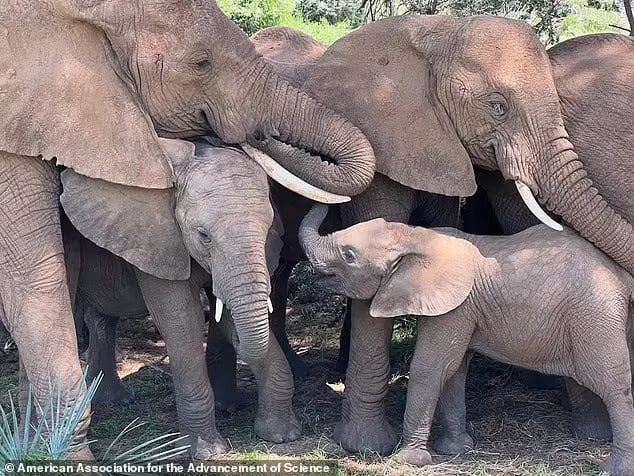
The calls conveyed a wide range of information, including the identity, age, sex, and emotional state of the caller and the context of the interaction.
When the researchers played recordings directed at specific elephants, those individuals responded energetically, validating the theory that the calls functioned as names.
In contrast, when calls not intended for them were played, the elephants showed little interest, reinforcing the idea that they recognized their names.
CSU research scientist Kurt Fristrup found the most intriguing aspect of the study to be that elephants were not merely mimicking each other’s sounds.
“The ability to use arbitrary vocal labels for other individuals suggests that elephants may have other types of descriptors within their communication system,” he said.
Researchers emphasized how expressive elephants are, making it relatively easy to interpret their reactions once the team became familiar with the animals.
The findings also suggest that elephants’ ability to use names may have evolved due to the need for complex social interactions, similar to how human communication developed over millions of years.
Co-author George Wittemyer, a CSU’s Warner College of Natural Resources professor, believes this study offers insight into the evolutionary pressures that shaped both human and elephant communication. “Complex social structures likely drove the development of this ability,” he said.
The team plans to conduct further studies to determine whether elephants also name objects they interact with, such as food, water, or locations, to expand their understanding of these fascinating animals’ communication abilities.
Read more Elephant News.


