
Loneliness is known to negatively affect humans, often leading to anxiety, depression, and other unpleasant symptoms.
A new study suggests elephants face similar challenges when isolated. Researchers discovered that elephants, like humans, exhibit higher stress levels when alone than when they are part of a group.
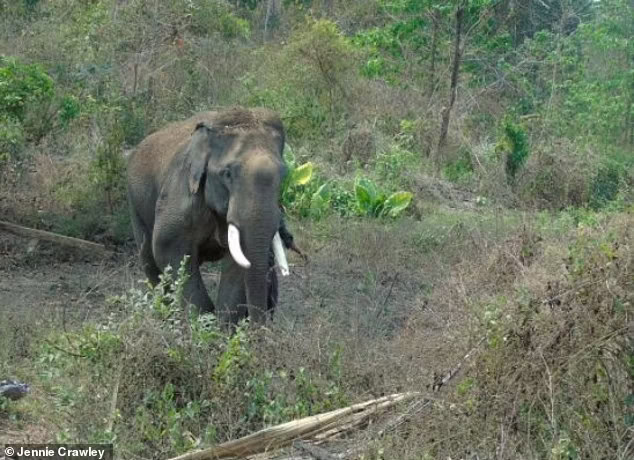
A team from the University of Turku studied the behavior of Asian elephants in Myanmar, focusing on their stress levels.
By analyzing the elephants’ fecal matter, the researchers measured stress hormone levels and examined how social interaction, or the lack thereof, impacted the animals.
The study found that male elephants, in particular, experienced heightened stress when alone, while females tended to be less stressed when babies were present in the group.
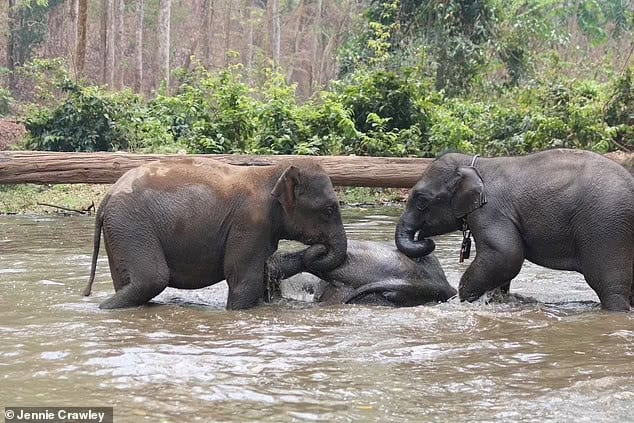
Previous studies on humans have shown that strong social connections provide various benefits, including better health, lower risks of illness, and increased longevity. Similar to humans, loneliness in elephants appeared to have negative consequences.
The charity Mind explains that prolonged loneliness in people can contribute to mental health issues like depression, anxiety, low self-esteem, sleep problems, and increased stress.
However, limited research had previously been done on the effects of loneliness on Asian elephants, a species known for its social nature.
This study focused on 95 Asian elephants working in Myanmar’s timber industry. Dr. Martin Seltmann, who led the study, noted that this unique environment allowed researchers to observe many elephants living in their natural habitat while gathering detailed information about their social interactions.
The researchers considered the elephants’ work group sizes, the gender composition of these groups, and the presence of babies.
They also spoke with the elephants’ handlers, who provided valuable insight into the animals’ social behaviors between 2014 and 2018.
“We found that male elephants show higher stress levels when they lack companions or are in groups dominated by males,” Dr. Seltmann explained. “In contrast, females tend to show lower stress levels when babies are present.”
Interestingly, the size of the social group did not seem to influence stress hormone levels in either males or females.
While the team initially expected solitary females to show more signs of stress, the results were mixed.
The researchers suggest that female elephants may still engage in social interactions without forming strong bonds, which might help them avoid feeling stressed.
These findings underscore the role of social connections in species beyond humans. The team hopes that their research can eventually inform strategies to improve the welfare of captive social animals, ensuring they lead less stressful lives in captivity.
Read more Elephant News.


