
The Crossbill is a bird known for its exceptional beak, explicitly designed to extract seeds from conifer cones accurately. This specialized adaptation allows it to feed in ways few other birds can.
Here, we’ll explore the Crossbill’s unique traits and behaviors and how this beak adaptation has helped the species thrive.
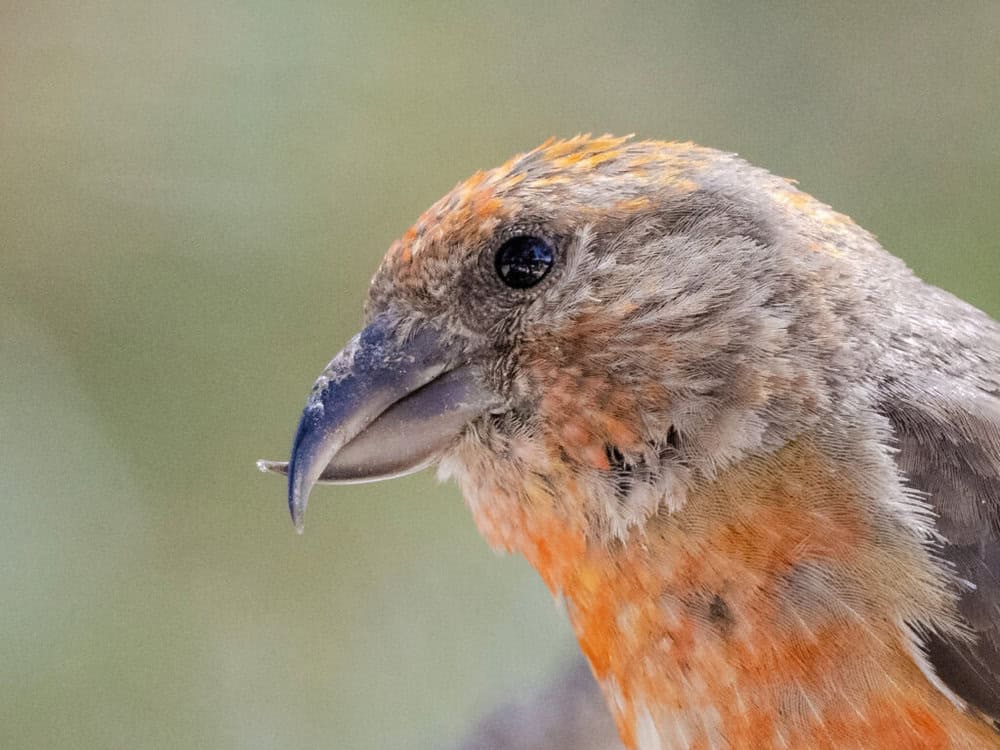
Belonging to the genus Loxia and part of the finch family, Fringillidae, Crossbills are medium-sized birds, generally around 5 to 6 inches long. Males are often red or orange, while females have green or yellowish tones, showing a clear difference between sexes.
Their crossed beaks are the most distinctive feature, making them easily recognizable. The Crossbill’s beak is an unusual marvel: the upper and lower parts of the beak curve to form a crossing shape. This shape lets them reach seeds hidden inside the scales of conifer cones.
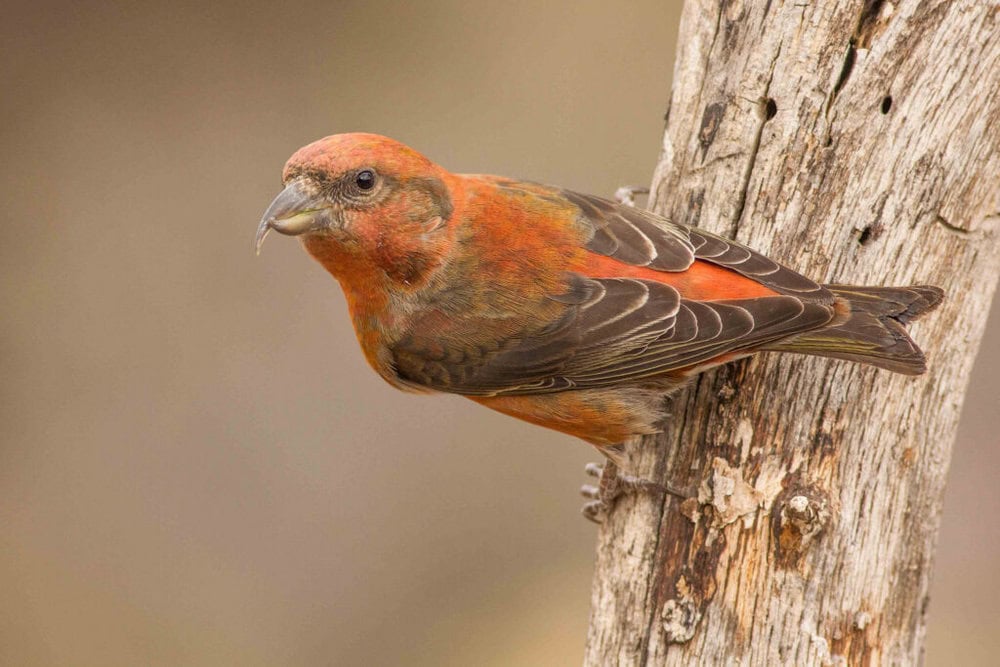
By inserting their crossed beak between cone scales, they can pry them open, gaining access to the nutritious seeds within—a method that gives them access to food sources unavailable to other birds.
Seeds from conifer trees like pine, spruce, and fir comprise most of the Crossbill’s diet. The crossed beak acts like a set of forceps, granting them control and dexterity in handling cones. This ability allows them to thrive in areas with limited food availability, particularly during challenging seasons.
Crossbills are also known for their unpredictable migration. They move in response to cone availability, roaming to find areas rich in food and suitable nesting sites. Coniferous forests and woodlands are the typical habitats for Crossbills, as these areas provide a steady supply of cone-bearing trees.
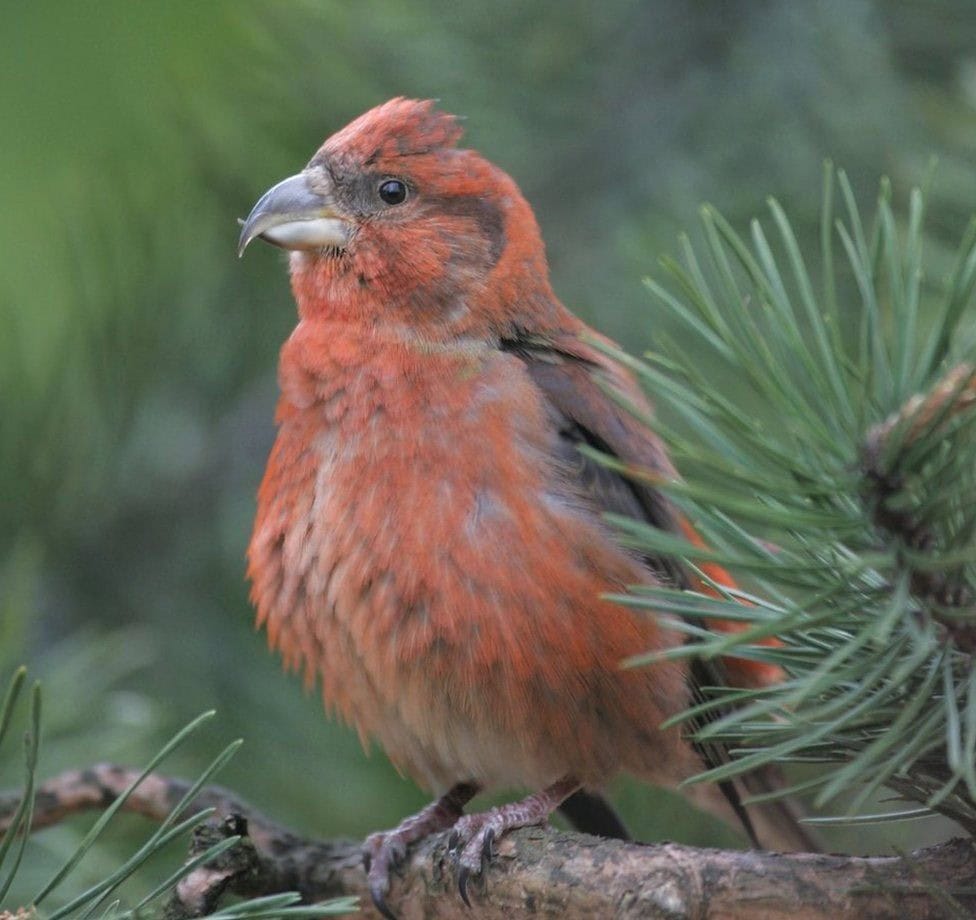
Crossbills form small flocks or family groups to breed during spring and summer, sometimes including multiple generations within these social groups.
These groups help them locate food sources and defend nesting areas. Their nests are often built in trees near cones, constructed in a cup shape to support their eggs.
While Crossbills are generally not considered globally at risk, some subspecies or local populations face challenges due to habitat loss and forest changes. Conservation efforts aim to protect and restore coniferous forests vital to their survival.
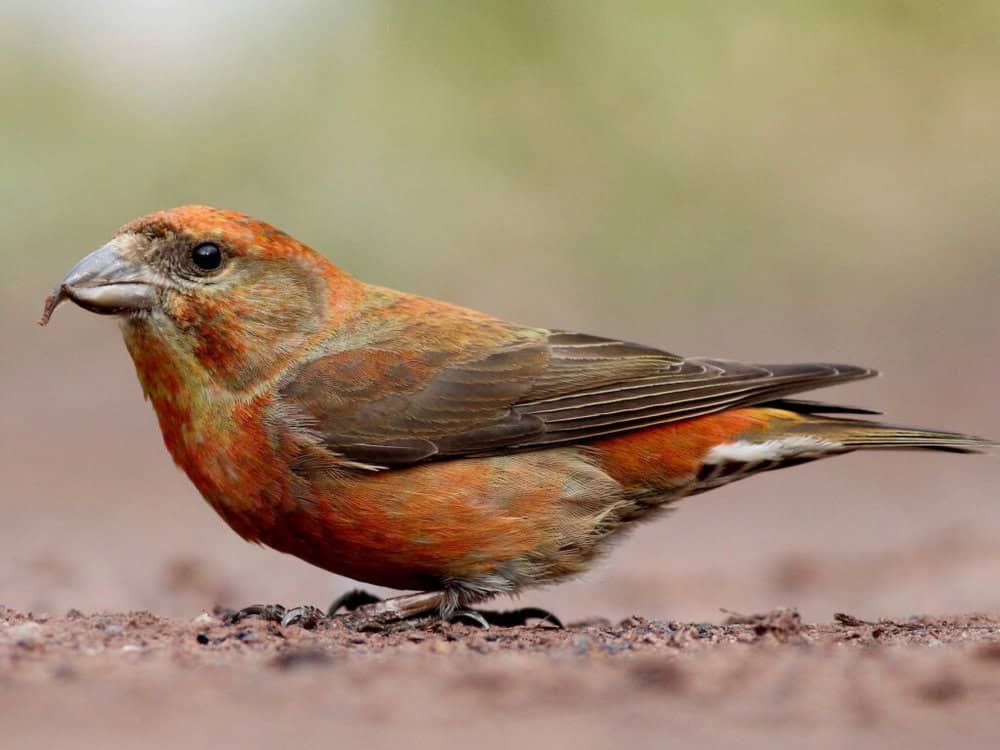
The Crossbill’s crossed beak is a striking example of evolution’s ability to shape species to fit their environments. Their feeding techniques, vibrant plumage, and adaptability make them a captivating bird to observe.
Learning about the Crossbill’s adaptations highlights how birds and their habitats are intertwined, offering a deeper appreciation for biodiversity.
Read More Birds