
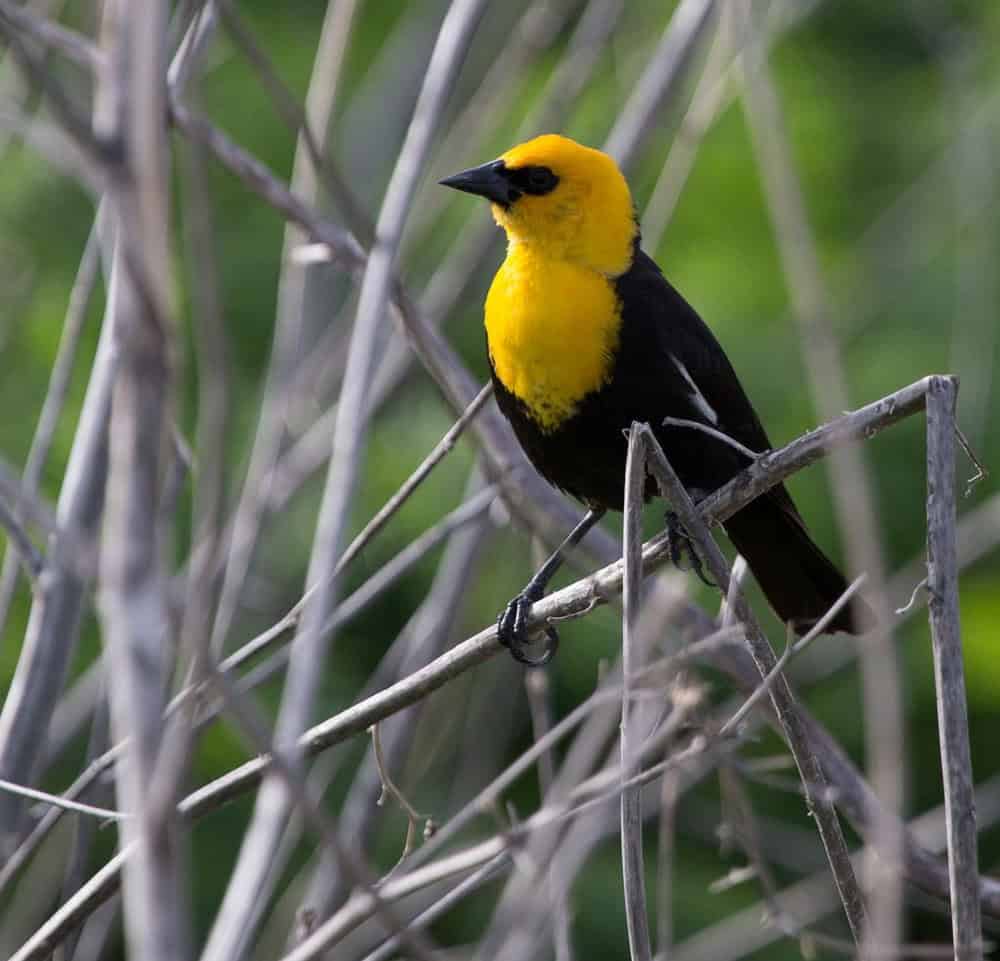
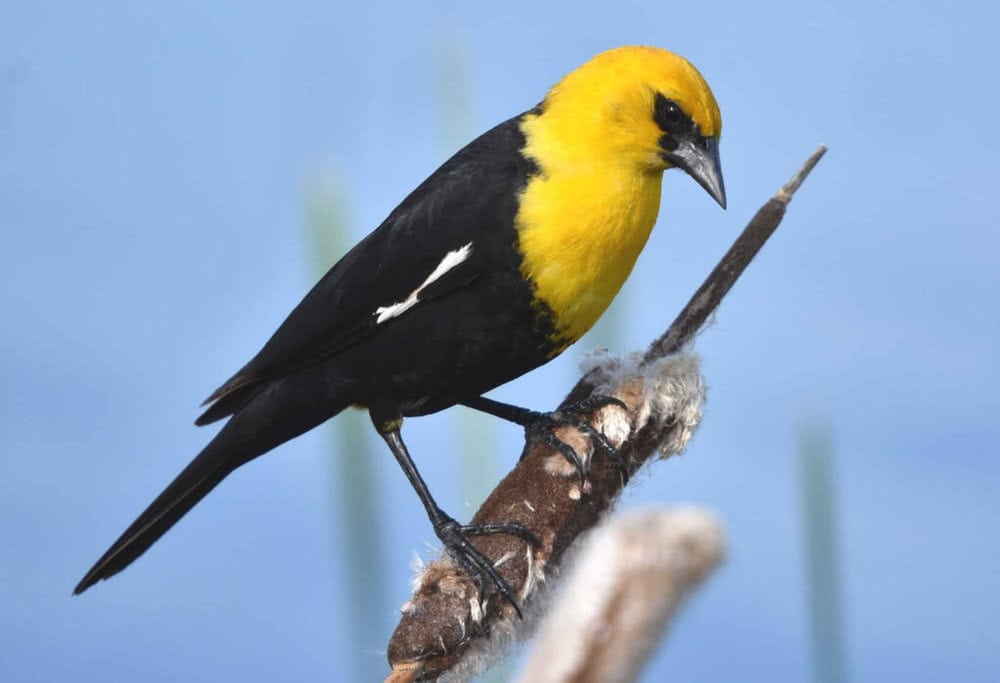
The Yellow-Headed Blackbird (Xanthocephalus xanthocephalus), with its brilliant golden head and contrasting dark feathers, is a unique bird in North America. This medium-sized blackbird, the only species in the Xanthocephalus genus, is visually stunning, though its call may surprise listeners with its grating tone.
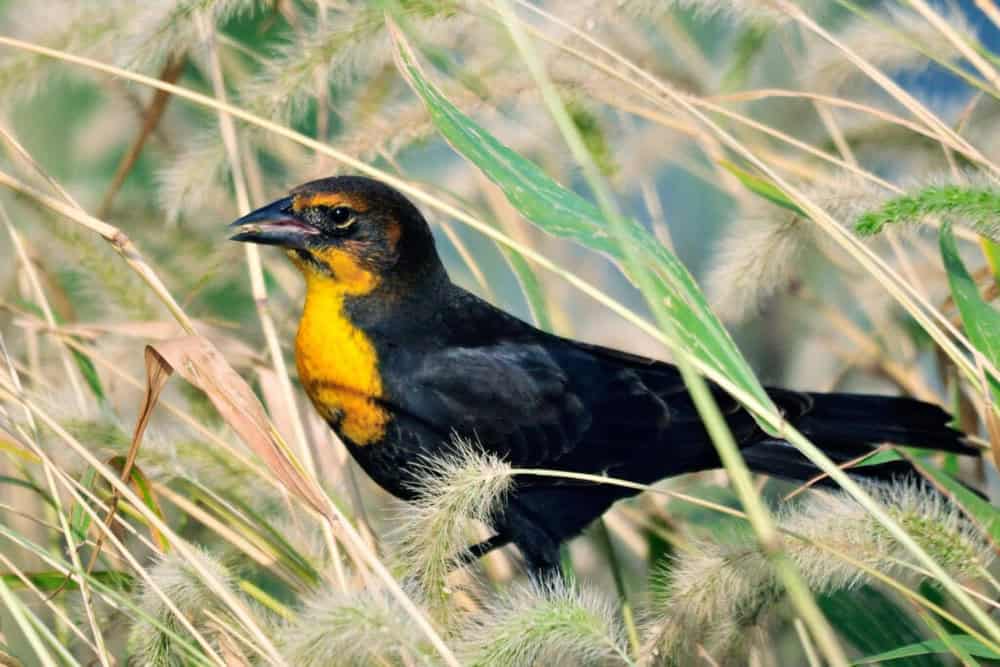
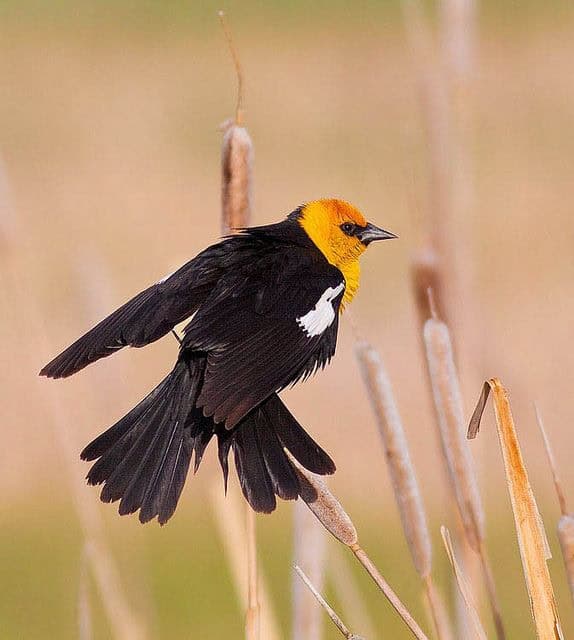
Adult males are characterized by their black plumage, bright yellow head, and a distinctive white wing patch, creating a bold color pattern that sets this bird apart. Females and juveniles are less vivid, showing brown feathers with muted yellow on the throat and chest.
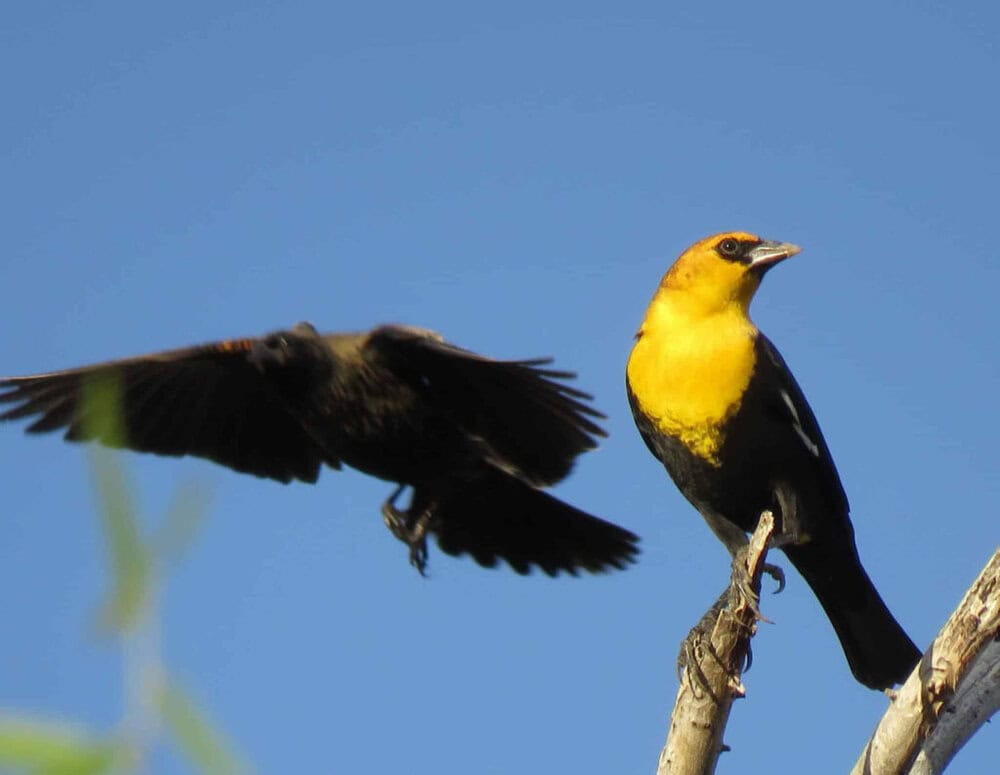
While Yellow-Headed Blackbirds breed in Arizona and California, their migratory journey takes them to the southwestern United States and Mexico each winter, displaying their adaptability and strength in covering large distances.
During breeding season, these birds favor cattail marshes across North America, mainly west of the Great Lakes. Marshes offer rich foraging grounds where they feed on seeds and insects from the ground or in waterlogged areas.
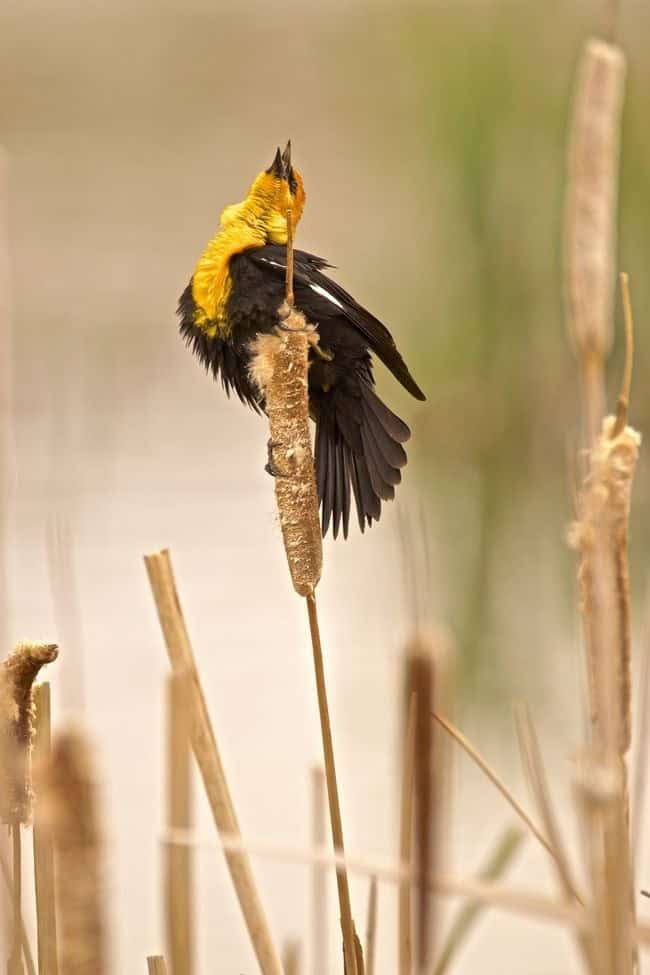
They’re often seen in flocks or mingling with other blackbird species, sometimes catching insects mid-flight. Male Yellow-Headed Blackbirds are known to defend small territories within dense reeds, showcasing their striking colors and vocalizations to attract females.
Up to eight females may choose one male’s territory to nest in, each building her own nest and primarily feeding her young, although the male assists with feeding his first nest’s young.
With a broad breeding range, this species maintains a stable population and is classified as “Least Concern” on the IUCN Red List. This reflects the Yellow-Headed Blackbird’s healthy numbers and secure status within its habitat.
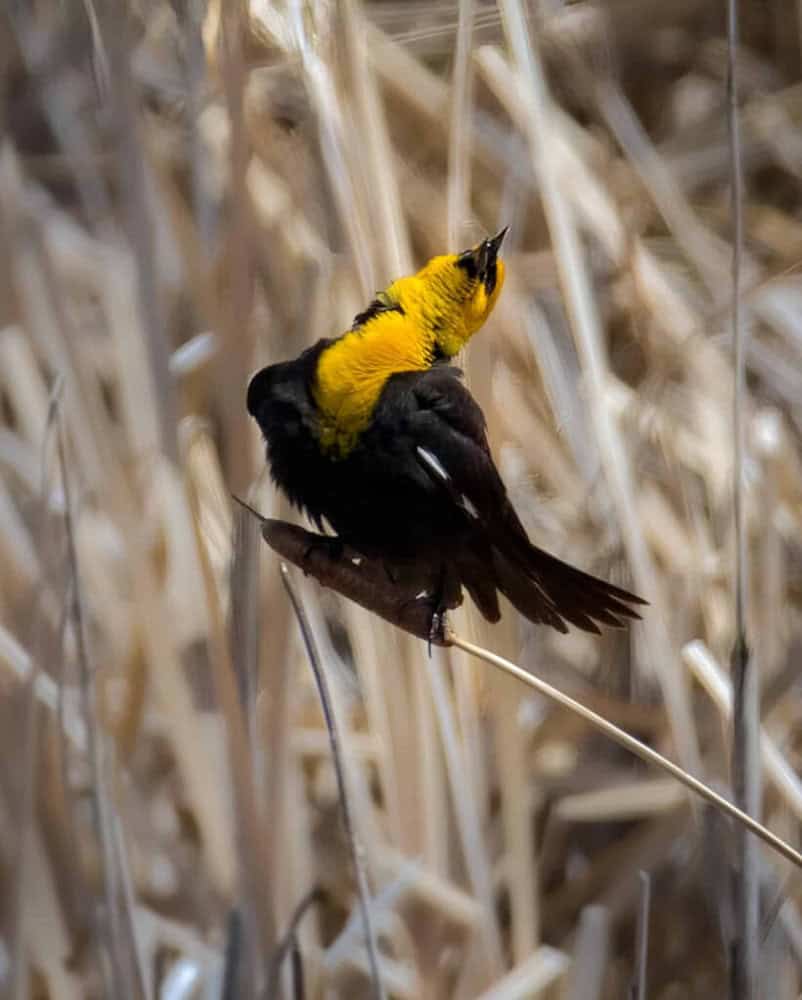
With its stunning appearance and unique behaviors, the Yellow-Headed Blackbird is a memorable sight for birdwatchers. Its golden head, set against black feathers, and remarkable survival strategies make this bird an intriguing part of North America’s marsh ecosystems.
Read More Birds
