
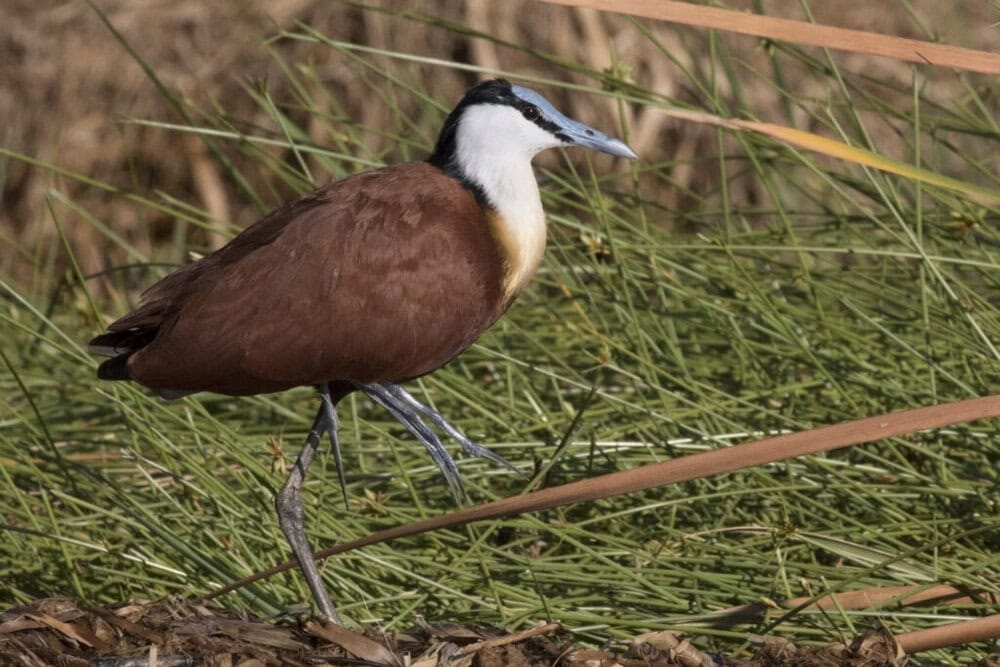
The African Jacana is a bird that might leave those unfamiliar with it puzzled at first glance. With its long legs and toes, some may wonder whether they’re looking at a bird or something more like a millipede. But rest assured, this intriguing creature is very much a bird—and one with fascinating features.
Scientifically named Actophilornis africana, the African Jacana is a wading bird native to sub-Saharan Africa. It thrives in wetland environments such as swamps and marshes. This species is medium-sized, measuring between 23 and 31 cm in length.
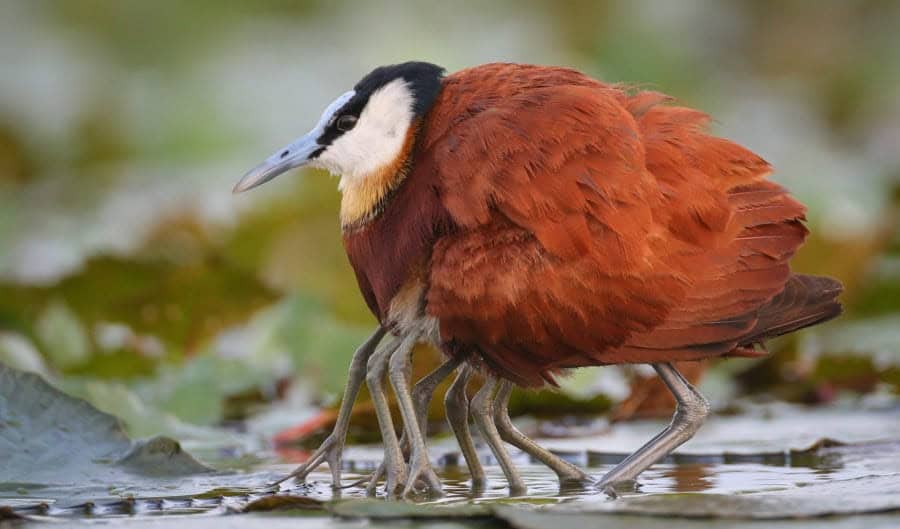
Females are noticeably larger than males, weighing about 261 grams compared to the males’ 137 grams, making it the largest bird in the Jacana family.
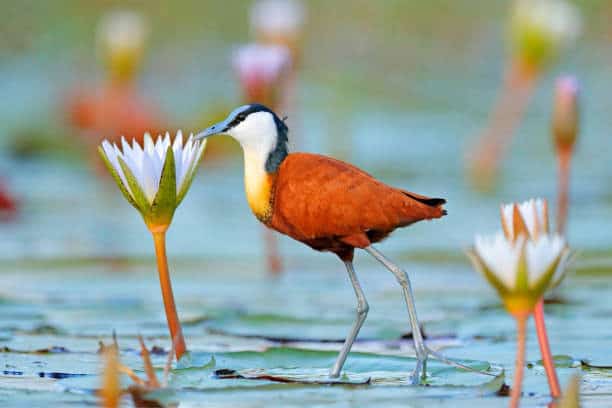
Known for its striking appearance, the African Jacana features dark stripes extending from its eyes, running down the back of its head to its wings, which are deep brown. It has a pale blue beak that extends to the center of its head and long, slender gray legs.
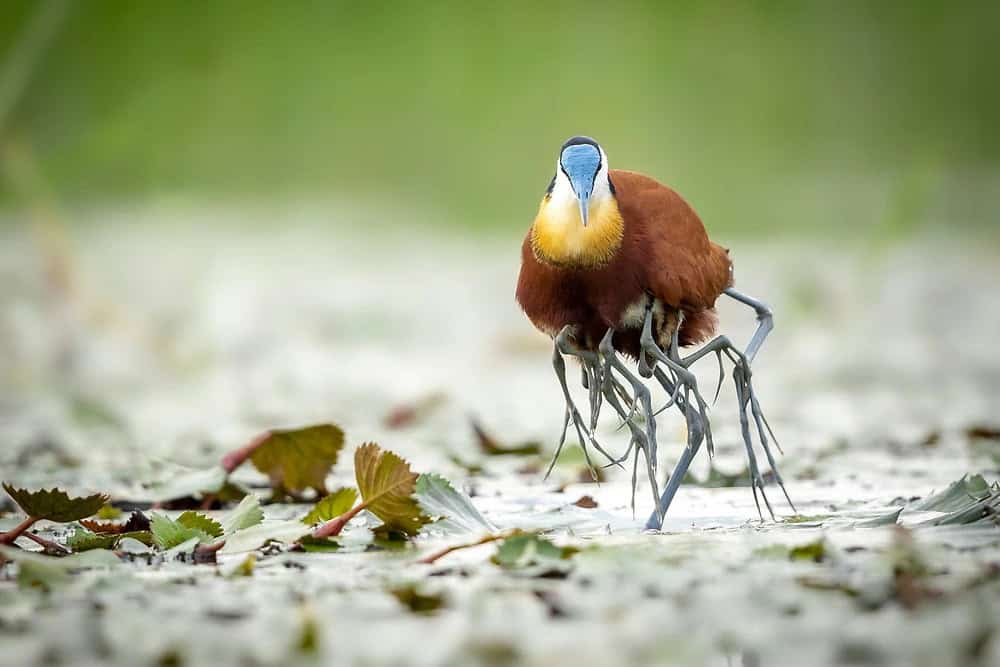
The underside of its body is also brown, though juveniles are initially white with brown streaks along their bellies. This bird’s ability to walk on floating vegetation in shallow water is made possible by its incredibly long toes, which measure up to 7 cm.
These long toes help it distribute its weight, allowing it to move easily across lily pads and other aquatic plants as it hunts for insects, crabs, and other small creatures.
During the breeding season, the African Jacana builds floating nests and lays about four eggs per clutch. What makes this bird even more unique is its parenting strategy. Females may mate with multiple males, leaving them to care for the eggs and young.
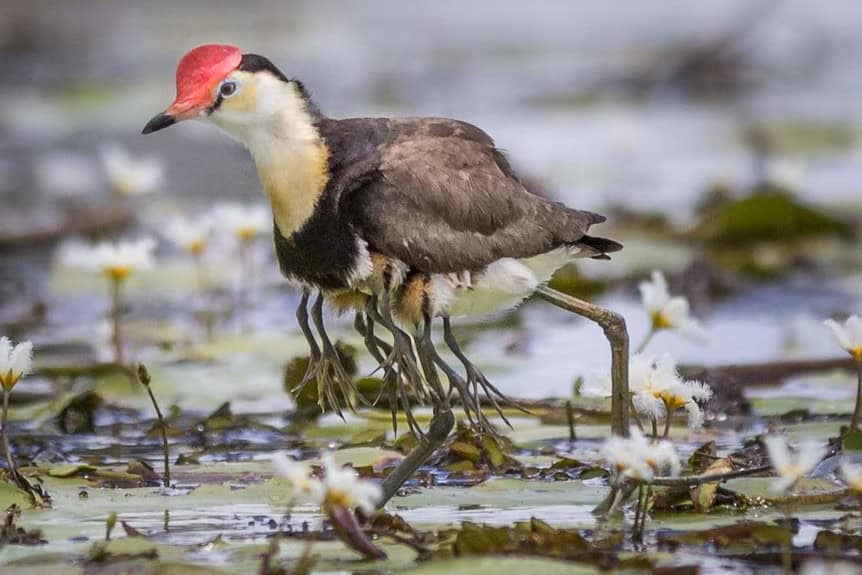
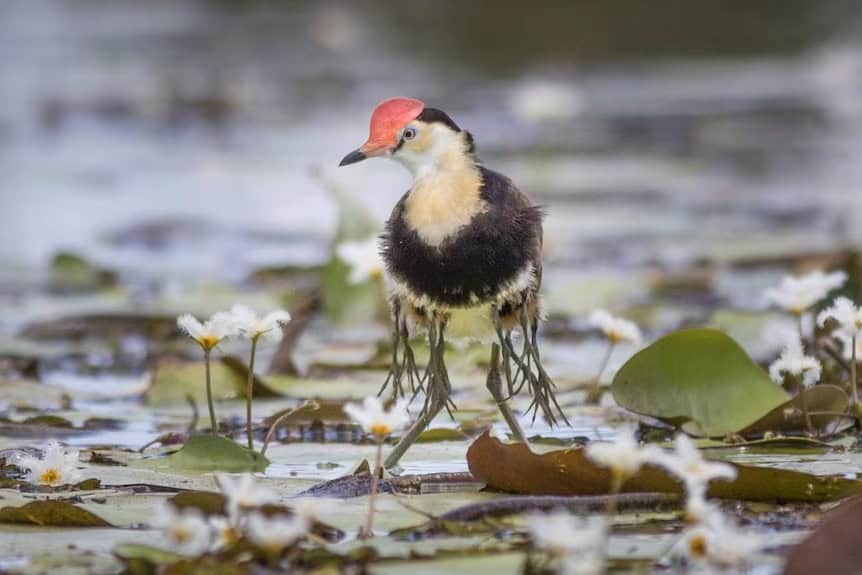
When the chicks hatch, they remain close to their father, often hiding under his wings or clinging to his body for protection. This is why the Jacana sometimes appears to have “extra” legs—those are actually the legs of its offspring, safely tucked beneath the parent as they travel together.
In addition to its unique appearance and lifestyle, the African Jacana plays an important role in maintaining the balance of its wetland ecosystem, keeping insect populations in check and aiding in the dispersal of plant seeds as it forages.
The African Jacana may be a small bird, but it has a big presence in Africa’s waterways, captivating anyone lucky enough to spot its many-legged illusion.
Read More Birds
