
Among South America’s diverse bird species, the Black-spotted Barbet stands out with its striking speckled feathers and melodic calls. Found primarily in the Guiana Highlands and the northeast Amazon, this bird adds to the rich biodiversity of its natural surroundings.
Known for its solitary classification, the Black-spotted Barbet has no subspecies, unlike its once-related counterpart, the Gilded Barbet, which is now considered a separate species.
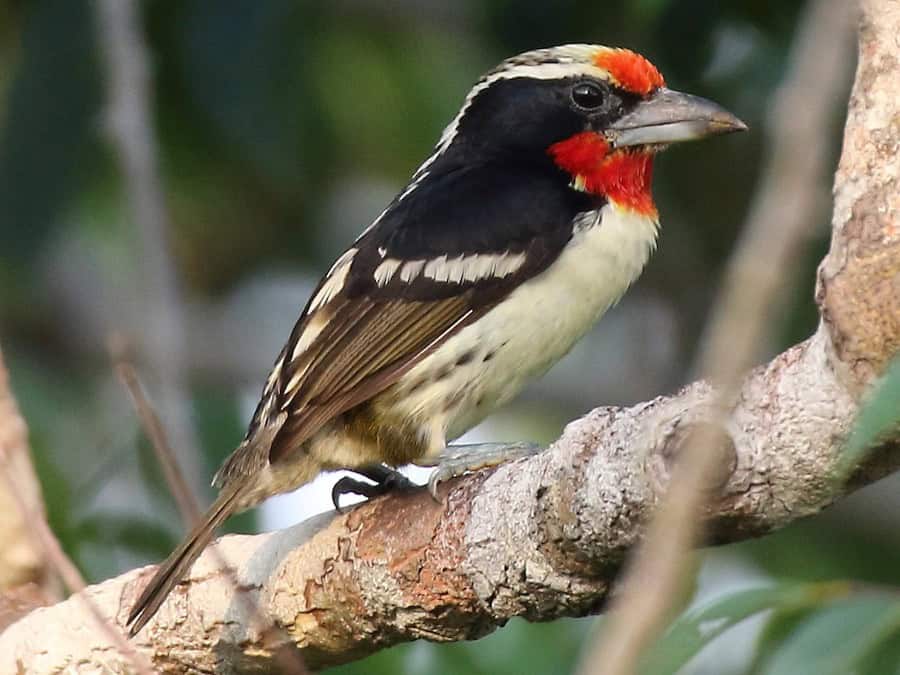
Typically seen in pairs or small groups, the Black-spotted Barbet thrives in a region that stretches from the Guiana Highlands to parts of the Amazon.
This bird features a sturdy body and a stout bill, measuring around 7.5 inches in length and weighing between 48 and 58 grams. Its striking plumage combines black and bright yellow hues, with females showing more black markings on their undersides.
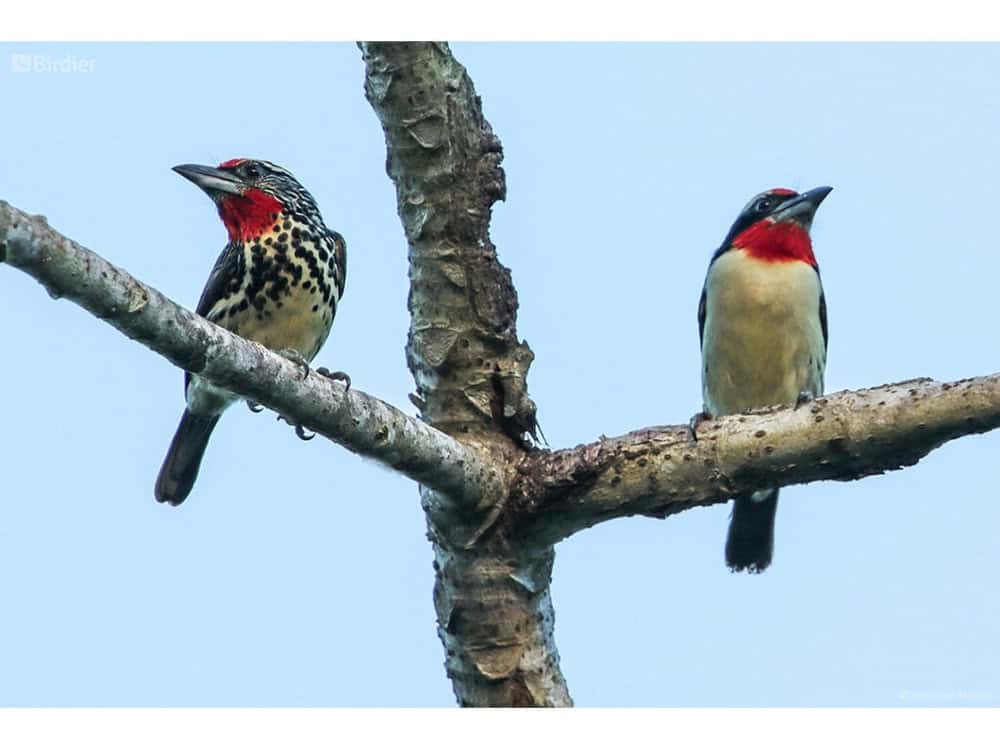
The Black-spotted Barbet enjoys a varied diet of nectar, fruits, insects, and spiders. In captivity, its diet can include a mix of special bird food, dried insects, fruit, and nectar.
Preferring the middle to upper layers of trees, the Black-spotted Barbet lives in subtropical and tropical moist lowland forests and swamps.
It adapts well to various environments, even venturing into areas that have experienced deforestation or are near human activity. Its habitat covers parts of eastern Colombia, Peru, Brazil, the Guianas, and Venezuela.
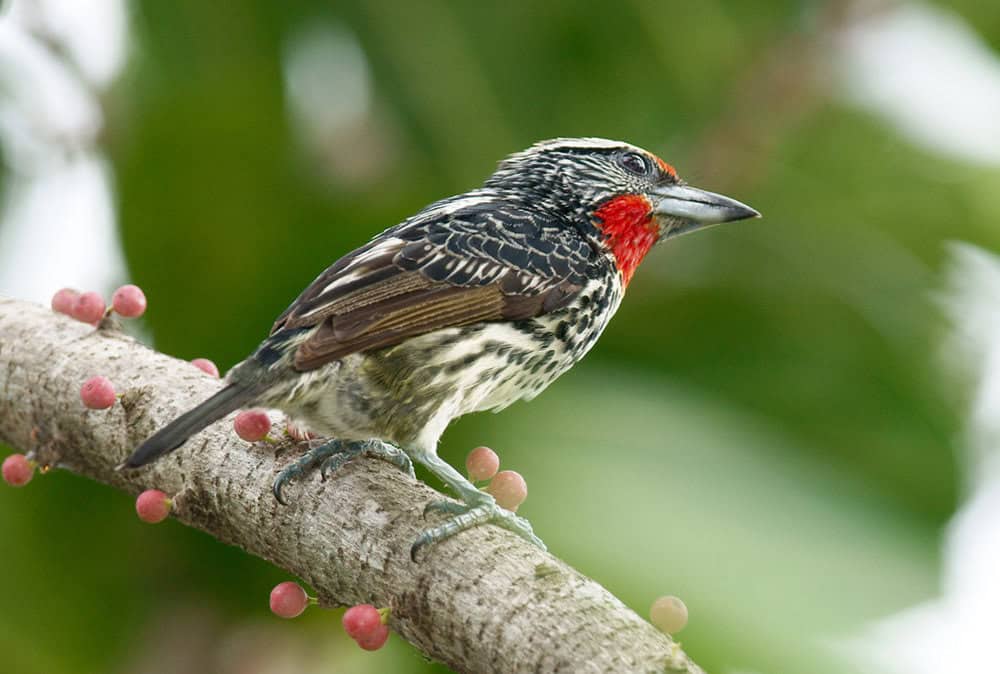
This bird’s nesting habits are fascinating. It typically nests in tree hollows, often using century plant stalks or old woodpecker nests, but will dig new holes in softer wood if necessary. The female lays 2 to 5 eggs per brood, with both parents sharing incubation duties for about 18 days.
The chicks leave the nest around 30 days after hatching, aided by special heel pads that help them move around in the nest.
The Black-spotted Barbet is a remarkable bird, not only for its eye-catching appearance and beautiful songs but also for its adaptability and unique nesting behaviors.
This species offers a glimpse into South America’s complex ecosystems and highlights the region’s incredible variety of wildlife.
Read More Birds
