
In Thailand, escalating encounters between humans and elephants have led to a sharp increase in fatal attacks.
As elephant numbers rise due to repopulation efforts, their shrinking habitats are forcing them closer to human settlements, resulting in more than 90 deaths in the country’s east since 2018.

Farmers, whose crops are being destroyed, have begun arming themselves with homemade “ping pong” bombs—small, roadside market explosives—hoping to drive the animals away. However, these bombs are making confrontations even more dangerous.
According to Taan Wannagul, an Eastern Elephants Education Centre researcher, these explosives have only aggravated the situation.

“Elephants naturally don’t attack, but when people use these bombs and loud noises, they become more aggressive,” he explained.
Villagers are facing increasingly violent encounters, with Wannagul noting that elephants can sometimes “play with bodies like dolls” after attacking.
One tragic incident involved a 73-year-old farmer, Pae Pakdee, who was killed by a 10-foot bull elephant nicknamed “Yellow.”
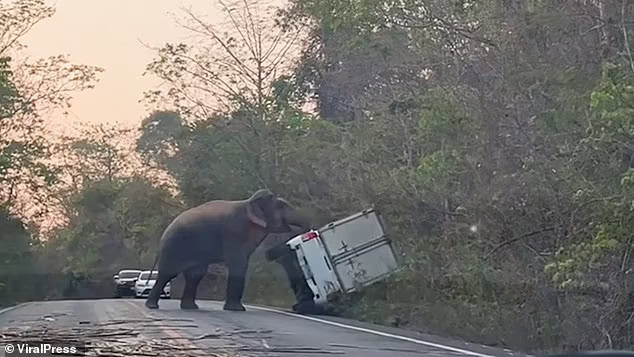
The elephant brutally tore off his limbs, leaving his wife, Boonsri Pakdee, heartbroken. Boonsri and many villagers believe coexisting peacefully with the elephants is now impossible.
In Thailand, elephants are considered sacred, and harming one can result in hefty fines and prison time.
This has led to frustration among locals, who feel their lives are being placed below the elephants’. Some villagers have resorted to hiding when elephants approach, fearing for their safety.
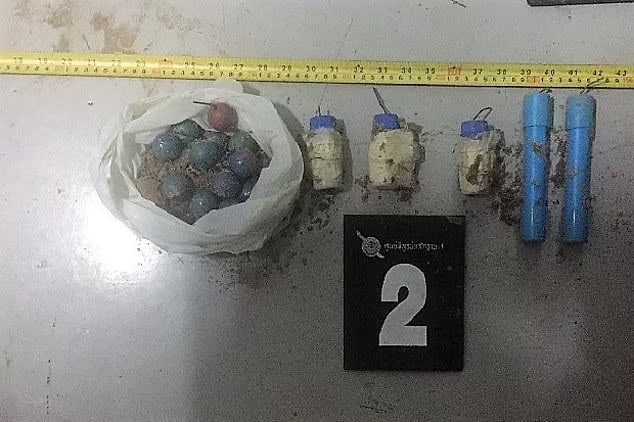
Despite their small size, the ping pong bombs are powerful enough to cause serious harm, but they’ve done little to deter the animals.
Wildlife rangers patrol parks and try to push the elephants back into protected areas using these explosives, but their efforts have had limited success.
The rangers lack the resources to cover large areas, and some villagers have taken matters into their own hands.
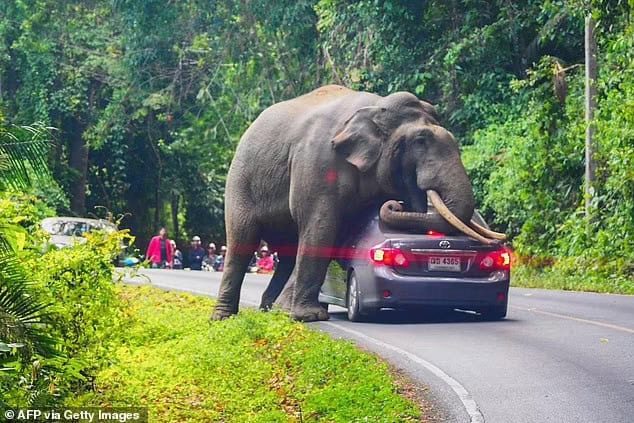
Wannagul, who has set up motion-sensor cameras to track elephant movements, is working with the Thai government to address the crisis.
They are launching a “war room” in October to monitor elephant activity and find better solutions, including the possibility of controlling the rapidly growing elephant population, which increases by 8% annually.
Conservationists commend Thailand’s efforts to save the elephant population, which has rebounded from less than 3,000 to around 4,000 in the wild.
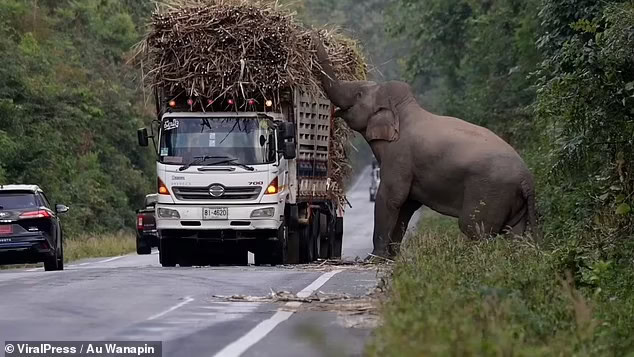
However, in the eastern regions, where the elephants are moving closer to villages, problems persist.
As forests shrink, elephants find human areas filled with readily available food, likened to a “buffet,” leading them to raid crops.
Farmers near Khao Ang Rue Nai Wildlife Reserve have destroyed their livelihoods, with some losing annual incomes to the elephants.
With limited government compensation, many are forced into debt to recover from the damage.
The situation worsens as elephants and humans are forced into closer contact, and solutions to the conflict remain elusive.
Read more Elephant News.


